


Understanding technical plumbing terms can feel confusing, especially when dealing with fittings, threads, and connection types used in modern systems. Many homeowners and even beginners often encounter the term FIP while working on installations or repairs. Therefore, learning the FIP meaning in plumbing is essential for anyone who wants reliable and leak-free connections.
In simple terms, FIP stands for Female Iron Pipe, which refers to a threaded fitting designed to receive a male threaded pipe. This concept forms a fundamental part of plumbing thread systems used in residential and commercial applications worldwide. Moreover, knowing how FIP works helps you choose the right fittings and avoid costly installation errors.
What is FIP in Plumbing?
The term FIP refers to a female threaded connection that allows a male threaded pipe or fitting to screw directly into it securely. This type of connection is widely used in plumbing systems because it creates a tight seal when combined with proper thread sealing materials.
Additionally, FIP connections are typically aligned with NPT thread standards, which are the most common threading standards used in North America. These tapered threads ensure that the connection becomes tighter as the fitting is turned, reducing the chances of leaks over time.
Key characteristics of FIP fittings include:
- Internal threading that accepts male pipe ends
- Compatibility with standard NPT thread systems
- Common use in water supply lines and fixtures
- Reliable sealing when used with thread tape or compound
Because of these advantages, FIP fitting plumbing solutions remain a preferred choice for plumbers and contractors across various projects.
Female Iron Pipe Thread Meaning Explained
To fully understand the female iron pipe thread meaning, it is helpful to break down the terminology into simple components. The word female refers to internal threads, while iron pipe indicates the traditional naming convention used in plumbing.
Although modern systems often use materials like brass, copper, or plastic, the terminology has remained consistent over time. Therefore, FIP does not necessarily mean the fitting is made of iron, but rather that it follows a specific thread design.
Furthermore, the term female pipe thread FPT is often used interchangeably with FIP, since both describe internal threaded fittings. This can sometimes confuse beginners, but both terms essentially refer to the same type of connection.
FIP Connection Plumbing and How It Works
An FIP connection plumbing system works by allowing a male threaded pipe to be inserted and tightened into a female threaded fitting. As the threads engage, they create friction and compression, which form a seal.
However, to ensure a leak-free connection, plumbers usually apply thread seal tape or pipe joint compound before tightening the fitting. This additional layer fills small gaps between threads and prevents water from escaping.
Here is a simple step-by-step process for making an FIP connection:
- Clean both male and female threads thoroughly
- Apply thread seal tape evenly on the male threads
- Insert the male pipe into the FIP fitting carefully
- Tighten using a wrench without over-tightening
- Check for leaks after installation
When done correctly, this method ensures a durable and long-lasting connection suitable for many plumbing applications.
FIP vs MIP Plumbing Comparison
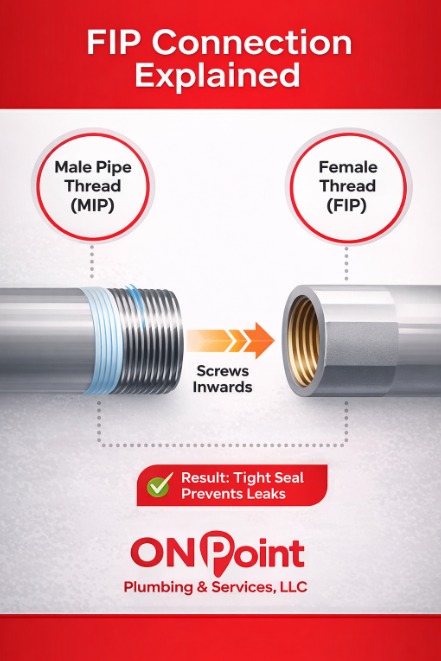
One of the most common questions people ask is about FIP vs MIP plumbing and how these two differ in function. While FIP refers to female threads, MIP stands for Male Iron Pipe, which features external threading.
Understanding this distinction is crucial because both components are designed to work together in a complementary manner.
Comparison Table
| Feature | FIP | MIP |
| Thread Type | Internal threads | External threads |
| Function | Receives male pipe | Fits into a female fitting |
| Common Use | Fixtures and connectors | Pipes and extensions |
| Sealing Method | Tape or compound required | Tape or compound required |
| Compatibility | Works with MIP | Works with FIP |
This simple comparison highlights that FIP and MIP are not competing options but rather matching components designed to connect seamlessly.

Plumbing Thread Types Explained
To better understand the meaning of FIP in plumbing, it is important to explore plumbing thread types explained in a clear and structured way. Plumbing systems rely on standardized threading to ensure compatibility across different fittings and materials.
The most common thread standard used in the United States is NPT, which stands for National Pipe Thread. These threads are tapered, meaning they become tighter as they are screwed together.
Other thread types include:
- BSP threads used in some international systems
- Straight threads used in specific applications
- Compression fittings that do not rely on threading
Despite these variations, threaded pipe fittings using NPT standards remain the most widely used option in residential plumbing systems.
Types of FIP Fitting Plumbing Applications
FIP fittings are used in a wide range of plumbing systems, making them extremely versatile and practical for different installations. Whether you are dealing with water supply lines or repair work, these fittings provide dependable connections.
Common applications include:
- Connecting faucets to water supply lines
- Attaching valves and shutoff systems
- Linking pipes in residential plumbing systems
- Repairing leaks in threaded connections
If you are dealing with water leaks or damaged connections, professional services like
https://onpointplumber.com/services/water-leak-repair/ can help ensure proper installation and long-lasting results.
Choosing the Right Plumbing Fitting Types
Selecting the correct plumbing fitting types is essential for ensuring efficiency and preventing leaks in your system. FIP fittings are ideal when you need a secure threaded connection that allows easy assembly and disassembly.
However, you should consider the following factors before choosing a fitting:
- Material compatibility with existing pipes
- Pressure requirements of the system
- Temperature conditions of the water flow
- Ease of maintenance and replacement
For complex plumbing systems or sewer-related issues, you can explore professional solutions at
https://onpointplumber.com/services/sewer-and-drain/ for expert assistance.
Common Mistakes When Using FIP Fittings
Even though FIP fittings are straightforward, mistakes during installation can lead to leaks or system failures. Therefore, understanding common errors helps prevent unnecessary repairs.
Some frequent mistakes include:
- Over-tightening the fitting, which damages the threads
- Skipping thread seal tape during installation
- Using incompatible thread types together
- Misaligning pipes during connection
By avoiding these issues, you can ensure a smooth and reliable plumbing system that performs efficiently over time.
When to Call a Professional Plumber
While many homeowners attempt basic plumbing tasks, certain situations require professional expertise to ensure safety and accuracy. Experienced plumbers should always handle complex installations or persistent leaks.
If you are unsure about FIP connection plumbing or need expert guidance, visiting
https://onpointplumber.com or reaching out through
https://onpointplumber.com/contact/ can provide reliable support and solutions.
Conclusion
Understanding the meaning of FIP in plumbing is essential for anyone working with pipe connections, fittings, and thread systems in modern plumbing setups. FIP refers to female threaded fittings that connect with male threaded pipes to create secure and leak-resistant joints.
By learning the differences between FIP vs MIP plumbing, exploring plumbing thread types explained clearly, and applying proper installation techniques, you can achieve efficient and durable plumbing systems. Whether you are handling a simple repair or a full installation, this knowledge empowers you to make better decisions and avoid costly mistakes.
Get Expert Plumbing Help Today
Ready to upgrade your plumbing knowledge or fix a leaking connection with confidence? Explore expert plumbing services and trusted solutions at On Point Plumber today. Whether you need quick repairs or full system support, their experienced team is ready to help you achieve reliable and efficient results
Frequently Asked Questions
What is FIP in plumbing?
FIP stands for Female Iron Pipe and refers to a fitting with internal threads designed to receive male threaded pipes.
Is FIP the same as FPT?
Yes, FIP and female pipe thread FPT generally refer to the same type of internal threaded plumbing connection.
What is the difference between FIP and MIP?
FIP has internal threads while MIP has external threads, and both are designed to connect securely.
Do FIP fittings require thread seal tape?
Yes, using thread seal tape or compound is recommended to prevent leaks and ensure a tight seal.
Are FIP fittings used in all plumbing systems?
FIP fittings are widely used in residential and commercial systems, but may vary depending on thread standards and applications.