

If you have ever dealt with slow drains that keep returning, you are not alone. Many homeowners assume the issue is minor. However, tree root intrusion in sewer lines often develops slowly and silently. As a result, small problems can become major plumbing failures.
Understanding tree root intrusion in sewer lines is more than basic plumbing knowledge. It helps protect your home from sewage damage and costly repairs. Also, it allows you to act early instead of reacting to emergencies. Therefore, informed homeowners make better decisions.
At On Point Plumbing, we deal with sewer issues daily across Texas. From inspections to full repairs, we see how roots damage pipes. So, we understand the warning signs and the most effective solutions.
Learn more at https://onpointplumber.com/services/sewer-and-drain/
Why does tree root intrusion in sewer lines happen
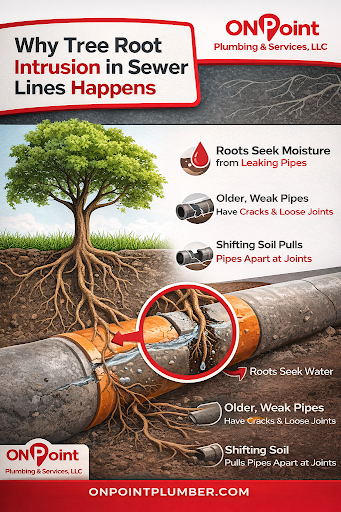
Tree roots naturally seek water sources underground. Therefore, even small leaks attract them quickly. Older sewer pipes often have weak joints or aging materials. Consequently, roots in sewer pipe systems find easy entry points.
In many homes, pipe joint cracks and root entry are the root cause. Meanwhile, soil movement can separate pipe joints slightly. Then, roots push into the opening and expand. Over time, this growth leads to sewer line root blockage.
How pipe materials affect root intrusion risk
Not all sewer pipes fail the same way. Some materials are more vulnerable than others. Therefore, pipe age and type matter greatly. Also, knowing your pipe material helps guide repair choices.
Common pipe risks include:
- Clay pipes that crack easily with age
- Cast iron pipes that corrode and separate
- Orangeburg pipes that collapse under pressure
- Older PVC with loose joints
Because of these risks, tree roots in drain line systems often target older homes. As a result, inspections are especially important for aging properties.
Tree root intrusion in sewer lines: warning signs to watch
Early symptoms often feel harmless. However, repeating issues should raise concern. Also, problems may worsen after rain or heavy water use. So, treat these as sewer backup warning signs.
Watch for these common clues:
- Slow drains throughout the home
- Gurgling sounds after flushing
- Sewer odors that keep returning
- Toilets are bubbling when sinks drain
- Wet soil or greener grass near the sewer path
Additionally, recurring drain clogs often include roots. For example, you clear a clog, and it comes back weeks later. That pattern often points to tree roots in the drain line growth. Therefore, further inspection is necessary.
Tree root intrusion in sewer lines and the role of inspections
Temporary fixes can restore flow for a short time. However, they often miss the real issue. A sewer camera inspection for roots provides clear answers. Also, it shows damage you cannot see from above.
A camera inspection can identify:
- The exact location of the roots in the sewer pipe
- The severity of the sewer line root blockage
- Pipe joint cracks and root entry points
- Whether damage is spreading
After inspection, repairs become targeted and efficient. So, you avoid repeated service calls. You can explore service options at https://onpointplumber.com/services/.
Repair options for tree root intrusion in sewer lines
Every sewer issue is different. Therefore, repairs should match the pipe condition. Some methods remove roots only. Others repair damage to prevent regrowth. So, the right plan often combines both.
Repair options comparison table
Option | Best for | Benefits | Limitations |
Hydro jetting for root removal | Soft roots and buildup | Restores strong flow | Does not seal cracks |
Mechanical root cutting | Thick root masses | Fast and effective | Roots can return |
Chemical root control | Ongoing maintenance | Slows regrowth | Not a repair |
Trenchless sewer line repair | Cracks and joint damage | Minimal digging | Pipe must qualify |
Full pipe replacement | Severe damage | Long-term fix | More excavation |
When hydro jetting is effective
When trenchless sewer line repair is recommended
When full sewer line replacement is necessary
In some cases, roots cause severe breaks or pipe collapse. Then, leaks worsen, and roots spread faster. At that point, sewer line repair for root damage may require replacement. Still, inspection ensures the least invasive solution.
How tree root intrusion in sewer lines affects your home long-term
Ignoring root issues can lead to serious consequences. Over time, blockages worsen, and pressure builds. Eventually, sewage may back up into the home. Therefore, early action protects your property.
Long-term risks include:
- Structural damage from sewage leaks
- Mold growth from hidden moisture
- Foundation soil erosion
- Health hazards from sewage exposure
Because of these risks, routine inspections are a smart investment.
How to reduce the chance of roots returning
Prevention saves money and stress. Therefore, maintenance should be proactive. Also, sealing pipe damage stops water leaks that attract roots. So, prevention starts with proper repairs.
Helpful steps include:
- Schedule a sewer camera inspection for roots
- Clear buildup before full blockage forms
- Repair joint issues early
- Avoid planting trees near sewer paths
- Follow professional maintenance plans
Additionally, track slow drains and odors over time. Then, act before backups occur.
Schedule professional help today.
If clogs keep returning, do not wait for a sewage backup. Instead, get a clear inspection and a lasting repair plan. On Point Plumbing provides expert inspections and sewer line repair for root damage.
Contact the team today at https://onpointplumber.com/contact/ to schedule service.
Frequently Asked Questions
What is the fastest way to confirm tree root intrusion in sewer lines?
A sewer camera inspection for roots provides immediate confirmation.
Can roots in the sewer pipe cause sewage backup inside the house?
Yes. Blockages can lead to sewer backup warning signs.
Will hydro jetting for root removal stop the problem permanently?
It clears roots. However, cracks allow regrowth.
Why does sewer line root blockage keep coming back?
Pipe joint cracks and root entry remain open.
What is the best sewer line repair for root damage in older homes?
Trenchless sewer line repair often works best, depending on pipe condition.




