


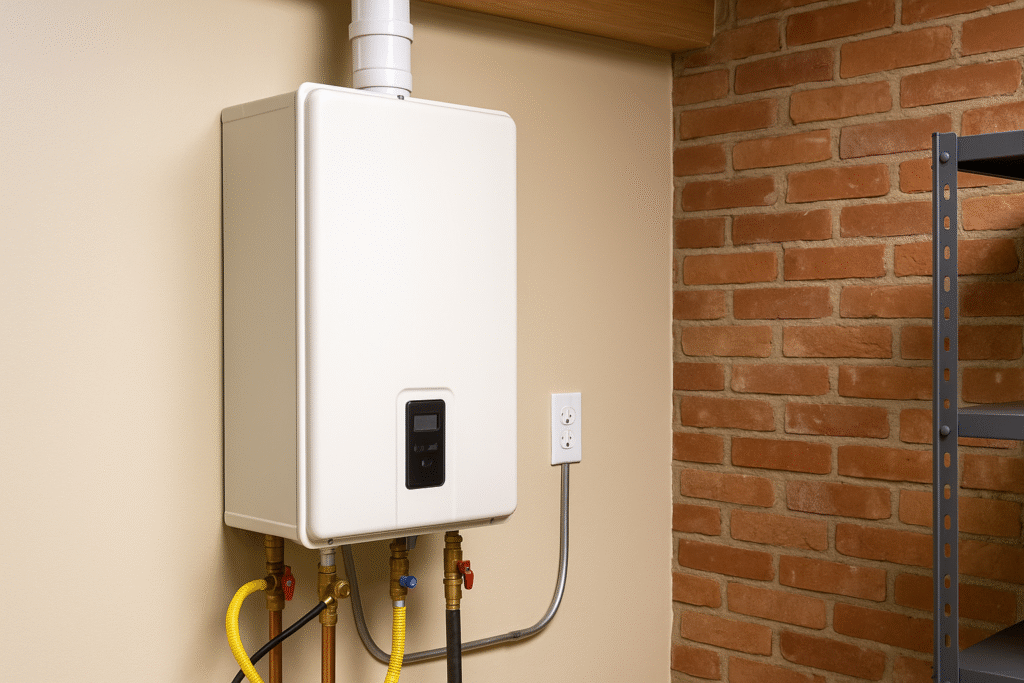
You know that feeling when you’re halfway through a warm shower and the water suddenly turns ice-cold? That shock usually means your water heater isn’t keeping up. And if you’ve switched or are thinking about switching to a tankless system, getting the tankless water heater sizing right makes all the difference.
Tankless units don’t store hot water like traditional tanks. Instead, they heat water on demand, but only within their capacity. Choose too small, and your morning shower competes with the washing machine. Choose too big, and you might overspend on energy and equipment you’ll never fully use.
Let’s break down how to size your tankless system correctly so every shower, laundry cycle, and kitchen cleanup stays perfectly warm.
Why Tankless Water Heater Sizing Matters
Proper tankless water heater sizing is not about buying the biggest model on the market. It’s about matching the system to your household’s real needs.
When a water heater is undersized, it struggles to keep up with demand. Hot water may run out mid-shower or take forever to reach the faucet. Oversized units, meanwhile, cost more upfront and may cycle inefficiently. Both situations waste money in different ways, one through frustration, the other through unnecessary energy use.
A well-sized tankless heater finds that balance point. It delivers enough gallons per minute (GPM) to handle your busiest times without overworking. And that means comfort, efficiency, and a system that lasts longer.
How to Size a Tankless Water Heater the Right Way
Sizing a tankless unit involves two main numbers: flow rate and temperature rise. Once you understand those, you’re halfway there.
Step 1: Identify Your Peak Demand
Think about when your household uses hot water the most. Maybe it’s two showers running while someone starts the dishwasher. Add up those water uses to find your peak demand.
Step 2: Add Up Flow Rates
Each fixture in your home has its own flow rate, measured in gallons per minute for tankless heaters. For example, showers usually use 2 to 2.5 GPM. Add up the fixtures you typically run at the same time to get your total.
Step 3: Account for Temperature Rise
Temperature rise is the difference between your incoming cold water and your desired hot water temperature. The colder your groundwater, the harder your system has to work. If your incoming water is 50°F and you want 120°F water, you need a 70°F rise.
Step 4: Match GPM and Temperature to a Model
Once you know your total GPM and temperature rise, compare that number to the tankless water heater’s performance chart. That tells you what size unit will keep your home comfortable year-round.
Typical Flow Rates for Common Fixtures
Fixture | Average Flow Rate (GPM) | Hot Water Usage Frequency |
Shower | 2.0–2.5 | Frequent |
Kitchen Faucet | 1.5–2.0 | Frequent |
Dishwasher | 1.0–1.5 | Occasional |
Washing Machine | 1.5–3.0 | Occasional |
Bathroom Sink | 0.5–1.0 | Frequent |
Here’s a quick example.
Let’s say your household often runs two showers (2.5 GPM each) and a kitchen faucet (1.5 GPM) at the same time. That’s a total of 6.5 GPM. In a moderate climate, you’ll want a tankless water heater rated for at least that flow rate at your region’s average groundwater temperature.
Choosing the Right Tankless Water Heater for Your Family Size
Every household’s water habits look a little different, but here’s a simple way to gauge what you need:
Household Size | Peak Demand Estimate (GPM) | Suggested System Size |
1–2 People | 3–5 | Small tankless unit |
3–4 People | 6–8 | Medium to large tankless unit |
5+ People | 8–12 | Large tankless or dual-unit setup |
If you’re looking for a tankless water heater for a family of four, a unit that provides around 7 GPM at your required temperature rise usually does the job. That’s enough for two showers and a kitchen appliance running at the same time without losing heat or pressure.
Families that run laundry and showers together might lean toward the upper end. Meanwhile, couples or smaller homes can save energy and money with a smaller model.
Understanding Flow Rate and Performance
Your tankless water heater’s flow rate controls how much hot water your system can deliver at once. Think of it like lanes on a highway: the more lanes (higher GPM), the more traffic (water) can move smoothly.
But if too many cars try to merge at once, things slow down. The same goes for hot water demand. When you exceed your heater’s flow rate, you’ll notice cooler water or reduced pressure. That’s your sign to either reduce simultaneous usage or upgrade your system size.
It’s also worth checking the manufacturer’s performance chart. Most list their GPM output based on temperature rise. A model that can produce 8 GPM with a 40°F rise might only deliver 5 GPM when the rise is 70°F. That’s why regional climate plays such an important role in choosing the right unit.
Energy Efficiency and Long-Term Savings
When correctly sized, a tankless system can reduce your energy use by up to 34% compared to traditional tank heaters, according to Energy.gov.
Proper tankless water heater sizing prevents your unit from overworking or short cycling, both of which reduce efficiency and wear down parts faster. It also means less wasted energy reheating water you’ll never use.
To get the most from your system:
- Schedule annual maintenance to flush out mineral buildup.
- Set your temperature around 120°F for comfort and safety.
- Avoid running multiple high-flow fixtures at once if your system is near its limit.
A tankless water heater is an investment, but the right size pays off through reliability, lower bills, and years of consistent comfort.
Real-World Example- Getting It Right the First Time
One family in Galveston recently called On Point Plumber after switching from a traditional tank to a small tankless system. They loved the idea of endless hot water, but soon discovered their new unit couldn’t keep up with two showers and the dishwasher running together.
After a quick inspection, our technicians calculated their actual flow rate and recommended a model with an 8 GPM capacity. Once installed, the difference was immediate: no more cold showers, no more frustration. Just steady hot water every time.
That’s the power of proper sizing. It’s not just about having hot water; it’s about having confidence that your system can keep up with your lifestyle.
Ready to Size Yours? Here’s Where to Start
If you’re unsure what size system your home needs, the best step is a professional consultation. At On Point Plumber, we help homeowners match systems to their real water habits, not guesses or one-size-fits-all estimates.
Our licensed plumbers handle everything from flow rate measurements to installation and maintenance. Learn more about our services on our Water Heater page.
Conclusion
Getting tankless water heater sizing right is the key to enjoying endless comfort and efficient performance. With a system tailored to your home’s water habits, you’ll save energy, avoid frustration, and extend the life of your equipment.
If you’re ready to upgrade or need help figuring out your home’s ideal size, reach out to On Point Plumber. Our team can help you choose, install, and maintain a tankless water heater that fits your family perfectly, no cold surprises, just steady warmth when you need it most.
Frequently Asked Questions
What is tankless water heater sizing?
It’s the process of matching your hot water usage and flow rate with a system that can meet demand efficiently without running out.
How to size a tankless water heater for my home?
Add the flow rates of all fixtures you use at once, then check that your chosen model can handle that total GPM at your region’s temperature rise.
How many gallons per minute do I need for a tankless heater?
Most homes need between 6 and 8 GPM. Larger households may need up to 12 GPM, while smaller homes can run comfortably on 3 to 5 GPM.
What size tankless water heater is best for a family of four?
A medium to large unit that provides about 7 GPM at your temperature rise usually meets a four-person household’s needs.
Does flow rate affect energy efficiency?
Yes. A properly sized flow rate helps your heater work efficiently, using energy only when needed without overloading the system.