

Clean drinking water is essential for every household. However, many homeowners struggle to choose between standard filtration systems and reverse osmosis technology. Both systems improve water quality, yet they work differently and remove different contaminants. Therefore, understanding the differences helps homeowners choose the right solution for their needs.
The debate around water filtration vs reverse osmosis continues because both systems offer unique benefits. Traditional filtration systems improve taste and remove common impurities, while reverse osmosis systems provide advanced purification for drinking water. Choosing the correct option depends on water quality concerns, household size, and purification goals.
Many homeowners want safer drinking water, improved appliance performance, and better-tasting water throughout the house. As a result, water purification systems have become increasingly popular in modern homes.
This guide explains the key differences between reverse osmosis and water filtration systems, including their benefits, limitations, maintenance needs, and ideal applications.
Understanding Water Filtration Systems
Water filtration systems remove impurities from water using physical or chemical filtering methods. These systems commonly use sediment and carbon filtration to reduce chlorine, dirt, debris, and unpleasant odors.
A whole-house water filtration system treats water as it enters the home. Consequently, every faucet and appliance receives filtered water.
How Water Filtration Works
Traditional filtration systems pass water through several filter layers that trap contaminants and particles.
Common Filtration Components
- Sediment filters
- Activated carbon filters
- Mineral reduction filters
- UV purification systems
These components improve water taste and odor while reducing common contaminants.
What Is a Reverse Osmosis Water System?
A reverse osmosis water system uses advanced membrane technology to remove dissolved solids and microscopic contaminants from water.
Unlike traditional filters, reverse osmosis systems force water through a semipermeable membrane. This process removes impurities that ordinary filters cannot capture.
RO systems are commonly installed beneath kitchen sinks and provide purified drinking water directly from a dedicated faucet.
What Reverse Osmosis Removes
Contaminant | Reverse Osmosis Removal |
Dissolved salts | Yes |
Heavy metals | Yes |
Chlorine | Yes |
Sediment | Yes |
Bacteria | Yes |
Minerals causing hardness | Yes |
RO membrane technology provides one of the most advanced water purification methods available for residential use.
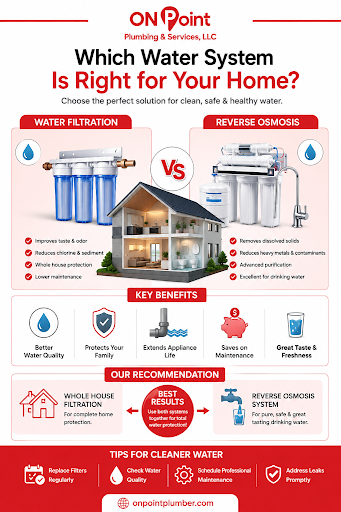
Water Filtration vs Reverse Osmosis
Understanding water filtration vs reverse osmosis requires comparing how each system treats water and removes contaminants.
Main Differences Between the Two Systems
Feature | Water Filtration System | Reverse Osmosis System |
Filtration method | Carbon and sediment filters | Membrane purification |
Removes dissolved solids | Limited | Excellent |
Improves water taste | Yes | Yes |
Installation area | Whole house or point of use | Mostly under the sink |
Water waste | Minimal | Moderate |
Maintenance frequency | Lower | Moderate |
Water purification level | Standard filtration | Advanced purification |
This RO vs water filter comparison helps homeowners understand which system matches their water quality goals.
Benefits of a Whole House Water Filtration System
A whole-house water filtration system improves water quality throughout the entire property. These systems are ideal for homeowners dealing with chlorine, sediment, and unpleasant odors in household water.
Advantages of Whole House Filtration
Cleaner Water Throughout the Home
Filtered water reaches sinks, showers, dishwashers, and washing machines.
Better Water Taste and Odor Improvement
Activated carbon filters remove chlorine smells and improve water flavor significantly.
Appliance Protection
Filtration systems reduce sediment buildup that damages plumbing fixtures and household appliances.
Lower Maintenance Requirements
Standard filtration systems usually require less maintenance than reverse osmosis units.
Many homeowners choose whole-house systems for overall home water quality improvement.
Benefits of Reverse Osmosis Water Systems
Reverse osmosis systems provide highly purified drinking water for cooking and daily consumption.
Key Advantages of Reverse Osmosis
Dissolved Solids Removal
RO systems remove microscopic contaminants that standard filters cannot capture effectively.
Better Drinking Water Filtration Solutions
These systems improve water clarity, taste, and purity significantly.
Effective Hard Water Treatment Systems
Reverse osmosis reduces minerals that contribute to hard water problems.
Advanced Purification Technology
RO membrane technology removes contaminants at a molecular level.
Homeowners concerned about water purity often consider reverse osmosis the best home water purification system.
Filtered vs Purified Water
Many people confuse filtered and purified water. However, important differences exist between these two water treatment approaches.
Filtered Water
Filtered water passes through physical filters that remove sediment, chlorine, and certain impurities.
Common Benefits
- Improved taste
- Better odor control
- Reduced sediment
- Lower chlorine levels
Purified Water
Purified water undergoes advanced treatment processes such as reverse osmosis to remove dissolved contaminants completely.
Common Benefits
- Higher purity levels
- Reduced dissolved solids
- Better contaminant removal
- Safer drinking water
Understanding filtered vs purified water helps homeowners select the correct system for their needs.
Which System Is Better for Your Home?
The answer depends on your water quality concerns and household requirements.
Choose Water Filtration If You Need:
- Whole home protection
- Better-tasting water
- Sediment removal
- Chlorine reduction
- Lower maintenance systems
Choose Reverse Osmosis If You Need:
- Purified drinking water
- Dissolved solids removal
- Heavy metal reduction
- Hard water treatment support
- Advanced purification
Some homeowners combine both systems for complete household water treatment.
Common Water Problems These Systems Solve
Different purification systems address different water quality issues.
Water Problem | Recommended Solution |
Chlorine taste | Carbon filtration |
Hard water minerals | Reverse osmosis |
Sediment buildup | Sediment filtration |
Unpleasant odor | Activated carbon filter |
Dissolved contaminants | Reverse osmosis membrane |
Appliance scale buildup | Water treatment system |
Professional water testing helps determine the best solution for specific household needs.
Under Sink RO Systems vs Whole House Filtration
Under-sink RO systems focus mainly on drinking and cooking water. Meanwhile, whole-house systems treat water throughout the property.
Under Sink RO Systems
Best For
- Drinking water purification
- Cooking water quality
- Small households
- Advanced contaminant removal
Whole House Water Filtration Systems
Best For
- Full home protection
- Shower and appliance filtration
- Sediment control
- Water odor reduction
Many homeowners install both systems together for complete water quality improvement.
Maintenance Requirements for Water Purification Systems
Proper maintenance keeps filtration systems operating efficiently and safely.
Water Filtration Maintenance Tips
- Replace carbon filters regularly
- Inspect sediment filters monthly
- Schedule annual inspections
- Flush systems periodically
Reverse Osmosis Maintenance Tips
- Replace RO membranes as recommended
- Clean storage tanks regularly
- Monitor water pressure
- Sanitize filters periodically
Regular maintenance extends system lifespan and ensures consistent water quality.
Why Professional Installation Matters
Professional installation ensures proper system performance and long-term reliability. Incorrect installation may reduce filtration efficiency and cause plumbing issues.
Benefits of Professional Water System Installation
- Accurate water testing
- Proper equipment sizing
- Leak prevention
- Reliable system setup
- Improved system lifespan
- Better purification performance
Experienced technicians help homeowners choose the most effective drinking water filtration solutions.
Why Homeowners Trust On Point Plumbing
On Point Plumbing provides reliable plumbing and water treatment solutions for homeowners seeking cleaner and safer water. Their experienced team installs and maintains filtration systems designed for long-term performance and efficiency.
Their services include:
- Reverse osmosis system installation
- Whole-house water filtration system setup
- Water quality inspections
- Drinking water filtration solutions
- Hard water treatment systems
- Plumbing system maintenance
Whether you need a reverse osmosis water system or complete home water quality improvement, professional technicians provide dependable solutions.
Learn more about trusted plumbing services by visiting:
Frequently Asked Questions
What is the difference between water filtration and reverse osmosis?
Water filtration removes common impurities, while reverse osmosis removes dissolved solids and microscopic contaminants through membrane purification.
Is reverse osmosis better than standard water filtration?
Reverse osmosis provides higher purification levels, but standard filtration works well for chlorine and sediment reduction throughout homes.
Do reverse osmosis systems waste water?
Yes. Reverse osmosis systems create some wastewater during purification, although newer systems are more efficient than older models.
Can I use both systems together?
Yes. Many homeowners combine whole-house filtration with under-sink RO systems for complete water quality improvement.
Which system improves the water taste better?
Both systems improve taste significantly, although reverse osmosis often provides cleaner and purer drinking water results.




