
Restaurants depend on their plumbing systems throughout every shift. Sinks, floor drains, dishwashing stations, and food preparation areas handle constant wastewater every day.
However, restaurant drains also face conditions that ordinary household drains rarely experience. Grease, food particles, soap, and other materials can gradually collect inside drain lines.
Therefore, preventive drain cleaning for restaurants should be part of routine commercial plumbing maintenance. Waiting until wastewater stops flowing can lead to unpleasant odors, backups, interrupted service, and emergency plumbing calls.
The Texas Commission on Environmental Quality explains that fats, oils, and grease can accumulate inside sewer pipes. As buildup grows, wastewater flow becomes restricted, and backups can occur.
For restaurants and commercial kitchens in Central Texas, regular drain care can help keep operations moving while reducing avoidable plumbing surprises.
Why Restaurant Drains Need More Attention
Commercial kitchens send large amounts of wastewater through their plumbing systems every day. This heavy use creates more opportunities for buildup inside drain lines.
Cooking also produces fats, oils, grease, food scraps, sauces, dairy residue, and other materials. Even small amounts can accumulate when they repeatedly enter the drainage system.
TCEQ specifically identifies restaurants and other commercial kitchens as businesses that must manage fats, oils, and grease. Proper management can reduce sewer backups and plumbing repair costs.
As a result, restaurant drain cleaning is not simply about fixing an occasional clog. It is also about protecting an important system before operations are interrupted.
What Causes Commercial Kitchen Drains to Clog?
Commercial drain problems usually develop gradually. Materials collect inside pipes until the opening becomes too restricted for wastewater to move normally.
Several substances can contribute to restaurant drain problems.
- Fats from meat and cooking
- Cooking oils
- Grease and shortening
- Butter and creamy sauces
- Food particles
- Soap residue
- Detergent residue
- Coffee grounds
- Starches
- Improperly discarded waste
TCEQ notes that fats, oils, and grease can cling to sewer pipes and restrict wastewater flow. These materials may also collect around other debris already inside the line.
Therefore, even kitchens with grease management practices can benefit from monitoring drain performance.
Why Grease Is a Serious Drain Problem
Grease can enter a drain while warm and appear harmless. However, conditions change as the material moves farther through cooler pipes.
Over time, fats and grease can collect along pipe walls. Additional food particles and debris can then attach to the existing buildup.
Eventually, the opening becomes narrower,r and wastewater flows more slowly.
A kitchen may first notice a slow sink. Later, staff may hear gurgling sounds or notice unpleasant odors near floor drains.
If the restriction continues growing, the kitchen can experience a complete blockage or sewage backup.
The EPA recommends controlling fats, oils, and grease before they enter public sewer systems. Grease interceptors and other management practices can help capture these materials.
Signs Your Restaurant Drains Need Professional Cleaning
Drain problems often provide warning signs before a complete blockage occurs. Recognizing them early can make professional service easier to schedule.
Watch for:
- Sinks draining more slowly than normal
- Water collecting around floor drains
- Frequent kitchen sink clogs
- Gurgling noises from drain lines
- Unpleasant odors near sinks
- Water returning through nearby drains
- Several drains slowing together
- Recurring clogs after basic cleaning
- Grease residue near drainage areas
A single slow sink may have a local obstruction. However, several slow fixtures can indicate a larger drain or sewer problem.
Therefore, recurring symptoms should not become part of normal kitchen operations.
Fewer Unexpected Clogs
Removing buildup before it blocks the pipe reduces the chance of sudden drainage failure during a busy shift.
Reduced Risk of Backups
A severe drain restriction can eventually force wastewater toward sinks or floor drains. Preventive cleaning helps address buildup earlier.
Better Kitchen Conditions
Slow drains and trapped food residue can contribute to unpleasant smells. Clean drains can help maintain a more comfortable working environment.
Easier Maintenance Planning
Scheduled service is easier to manage than an emergency call during lunch or dinner service.
Longer Plumbing System Performance
Regular inspection and cleaning can help identify drain problems before repeated blockages place additional stress on the system.
How a Restaurant Drain Clog Develops
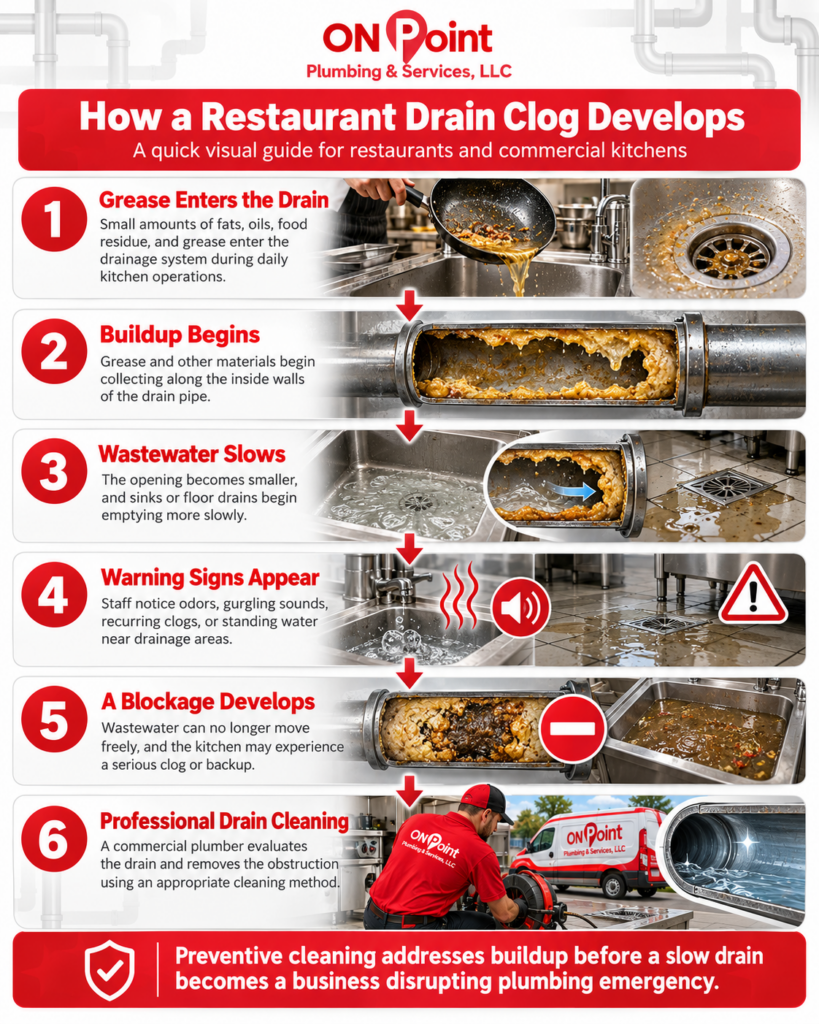
Key Message: Preventive cleaning addresses buildup before a slow drain becomes a business-disrupting plumbing emergency.
Why Emergency Drain Problems Are Especially Difficult for Restaurants
A clogged drain is inconvenient in any building. However, restaurants depend on functioning plumbing for many essential activities.
Dishwashing may stop when sinks cannot drain. Food preparation areas can also become difficult to use safely.
Meanwhile, wastewater near floors or kitchen equipment can require immediate attention.
TCEQ explains that effective grease management can reduce the likelihood of emergency shutdowns caused by sewage backups. It can also lower the risk of expensive plumbing and property repairs.
Therefore, preventive maintenance is not simply another property expense. It can support continuity during the hours when customers expect normal service.
What Restaurant Staff Can Do Between Professional Cleanings
Professional service is important, but daily kitchen habits also influence drain performance.
Restaurant staff can help reduce buildup by following consistent disposal practices.
- Scrape plates before washing them.
- Keep food scraps out of sinks.
- Collect cooking oil for proper disposal.
- Keep grease out of floor drains.
- Use appropriate sink strainers.
- Clean drain screens regularly.
- Report slow drains immediately.
- Watch for recurring sewer odors.
- Follow local grease interceptor requirements.
- Keep maintenance records for recurring problems.
TCEQ recommends keeping fats, oils, and grease out of drains and properly managing waste from commercial kitchens.
Training employees can make these practices more consistent during busy periods.
What About Grease Traps and Interceptors?
Grease traps and interceptors are important parts of many commercial kitchen wastewater systems. They help capture fats, oils, and grease before those materials enter sewer lines.
However, having a grease trap does not mean restaurant drain lines can be ignored.
The device must operate properly and receive appropriate maintenance. Requirements can also vary according to local plumbing rules and wastewater authorities.
TCEQ provides model standards for grease management and notes that local governments may establish pumping and maintenance requirements.
Therefore, restaurants should follow the rules that apply to their specific location rather than relying on a universal cleaning schedule.
How Often Should Restaurant Drains Be Cleaned?
There is no single schedule that works for every commercial kitchen.
A busy restaurant preparing fried foods may create different drainage conditions from a small cafe with limited food preparation.
Cleaning frequency can depend on:
- Kitchen volume
- Type of food prepared
- Drain history
- Grease production
- Pipe condition
- Grease interceptor performance
- Previous backups
- Local requirements
A professional plumber can evaluate these factors and recommend an appropriate commercial drain cleaning schedule.
Businesses with recurring clogs should generally avoid waiting for another complete blockage before requesting service.
Commercial Drain Cleaning in Central Texas
Restaurant plumbing requires experience with heavy usage and commercial drainage conditions.
On Point Plumbing provides commercial plumbing services for restaurants, offices, retail properties, and other businesses. Its service area includes Zephyr, Brownwood, Early, Lake Brownwood, Comanche, Bangs, Dublin, and surrounding communities.
The company also offers sewer and drain cleaning designed to address clogs and backups.
Therefore, businesses searching for commercial drain cleaningin Central Texas, a commercial plumber in Zephyr TX, or drain cleaning Brownwood TX can connect preventive drain care with broader commercial plumbing maintenance.
Keep Your Kitchen Flowing Before the Dinner Rush Starts
Your kitchen should focus on serving customers rather than dealing with wastewater that refuses to leave the sink.
Seeing slow drains?
Schedule professional cleaning before the restriction becomes worse.
Dealing with recurring grease clogs?
Have the drain system inspected instead of repeatedly treating the visible symptom.
Noticing odors or gurgling?
Request service before a developing blockage affects several drains.
Need commercial drain cleaning in Central Texas?
Contact On Point Plumbing for sewer, drain, and commercial plumbing services in Zephyr, Brownwood, and surrounding communities.
Preventive care can help your kitchen stay focused on food, customers, and smooth daily operations.
Frequently Asked Questions
Why do restaurant drains clog so often?
Restaurant drains handle grease, food particles, soap, and heavy wastewater volumes. These materials can gradually collect inside pipes and restrict drainage.
Does a grease trap prevent every restaurant drain clog?
No. Grease traps help capture grease, but drain lines can still develop buildup from food residue and other materials.
How often should commercial kitchen drains be professionally cleaned?
The right schedule depends on kitchen volume, grease production, drain history, pipe condition, and local requirements. A plumber can recommend suitable intervals.
What are the first signs of a commercial kitchen drain problem?
Common signs include slow drainage, recurring clogs, gurgling sounds, unpleasant odors, and water collecting around sinks or floor drains.
Why is preventive drain cleaning better than waiting for a clog?
Preventive cleaning addresses developing buildup before drainage stops completely. This can reduce unexpected backups and help restaurants plan plumbing service around operations.


