


A water pressure booster can transform weak water flow into a strong and reliable supply throughout your home. However, selecting the correct pipes for water pressure booster systems is just as important as choosing the pump itself. The wrong pipe material or size can reduce efficiency, increase wear, and even lead to costly plumbing failures.
In this guide, you will learn everything you need to know about plumbing for water pressure booster systems. We will cover pipe materials, sizes, compatibility, and practical tips to ensure long-term performance and safety.
Why Choosing the Right Pipes Matters
A booster pump increases water pressure significantly, which means your pipes must handle higher stress and flow rates. Therefore, using pressure-rated plumbing pipes is essential for preventing leaks, bursts, and system inefficiencies.
Additionally, proper pipe selection helps maintain a consistent water flow rate and pipe sizing balance. This ensures the pump works efficiently without overloading or causing excessive friction loss.
Best Pipe Materials for Water Pressure Booster Systems
Different pipe materials offer varying levels of strength, flexibility, and resistance to pressure. Choosing the best pipe for booster pump installation depends on your home setup and water requirements.
1. PEX Pipes
PEX pipes are widely used due to their flexibility and durability under pressure conditions. They are easy to install and resist corrosion, which makes them suitable for modern homes.
Advantages of PEX pipes:
- Flexible and easy to route through tight spaces
- Resistant to scale buildup and corrosion
- Handles moderate to high pressure effectively
However, PEX may not always be ideal for extremely high-pressure systems without proper rating verification.
2. PVC Pipes
PVC pipes are a cost-effective option for many plumbing systems. They are lightweight and resistant to chemicals, which makes them popular for residential use.
Key considerations:
- Suitable for cold water applications
- Affordable and easy to install
- Limited heat resistance
When comparing PEX vs PVC for booster pump setups, PVC works well for budget installations but may not handle higher temperatures.
3. CPVC Pipes
CPVC pipes offer improved temperature resistance compared to standard PVC. They are often used in both hot and cold water systems.
Benefits of CPVC pipes for pressure booster systems:
- Higher temperature tolerance
- Good pressure handling capability
- Durable and long-lasting
CPVC pipes for pressure booster setups are a reliable choice when dealing with varying water temperatures.
4. Galvanized Steel Pipes
Galvanized pipes are strong and capable of handling high-pressure water systems. However, they are less common in modern installations due to corrosion concerns over time.
Comparison insight:
- Strong but heavy
- Prone to internal corrosion
- Reduced flow efficiency over time
When evaluating galvanized vs PEX pipes, PEX is often preferred for modern residential systems due to longevity and flexibility.
Pipe Size for Booster Pump Systems
Selecting the correct pipe size for booster pump systems is critical for maintaining proper water flow and minimizing pressure loss.
Recommended Pipe Sizing Guidelines
| Application Area | Recommended Pipe Diameter | Notes |
| Inlet Pipe | 1 inch or larger | Ensures an adequate water supply to the pump |
| Outlet Pipe | 1 inch or 1.25 inch | Maintains strong pressure distribution |
| Main Distribution | 0.75 inch to 1 inch | Depends on home size and demand |
Proper pipe diameter for water pressure systems ensures that the booster pump operates efficiently without unnecessary strain.
Understanding Pipe Friction Loss
Friction loss occurs when water moves through pipes and loses pressure due to resistance. Therefore, minimizing friction loss is essential for maintaining system efficiency.
Factors Affecting Friction Loss
- Pipe material and internal smoothness
- Pipe length and number of bends
- Water flow rate and pipe sizing
A smooth pipe material like PEX or CPVC reduces resistance and improves overall system performance.
Booster Pump Inlet and Outlet Piping
The design of the booster pump inlet and outlet piping directly impacts system efficiency. Therefore, proper installation techniques must be followed.
Key Installation Tips
- Use straight pipe runs wherever possible to reduce resistance
- Avoid sharp bends and unnecessary fittings
- Ensure proper alignment with pump connections
Additionally, using compatible pipe material ensures durability and prevents leaks over time.
Pressure Requirements for Residential Systems
Understanding plumbing pressure requirements helps you choose high-pressure water pipes for homes that can handle increased load.
Typical Pressure Range
| System Type | Pressure Range |
| Standard Home | 40 to 60 PSI |
| Booster System | 60 to 80 PSI |
| High Demand Setup | 80 PSI or higher |
Using pressure-rated plumbing pipes ensures safety and long-term reliability under these conditions.
Pipe Material Compatibility with Booster Pumps
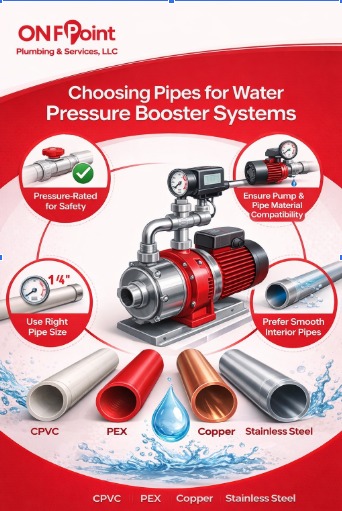
Not all pipe materials are equally compatible with booster pumps. Therefore, evaluating pipe material compatibility for booster pumps is essential before installation.
Compatibility Overview
| Pipe Material | Compatibility Level | Best Use Case |
| PEX | High | Residential systems |
| PVC | Moderate | Cold water lines |
| CPVC | High | Hot and cold systems |
| Galvanized | Moderate | Older systems |
Choosing the right material improves system lifespan and reduces maintenance requirements.

Common Mistakes to Avoid
Many homeowners overlook important factors when installing booster systems. Therefore, avoiding these mistakes can save time and money.
- Using undersized pipes, which restrict water flow
- Ignoring the pressure ratings of pipe materials
- Installing too many bends and fittings
- Mixing incompatible pipe materials
Proper planning ensures your plumbing for the water pressure booster system operates efficiently for years.
Professional Installation and Support
While some installations can be done independently, consulting professionals ensures accurate sizing and safe setup. You can explore expert plumbing services at
https://onpointplumber.com
For urgent issues like leaks, visit.
https://onpointplumber.com/services/water-leak-repair/
If you need complete drainage solutions, check
https://onpointplumber.com/services/sewer-and-drain/
For personalized guidance or installation support, reach out here.
https://onpointplumber.com/contact/
Final Thoughts and Call to Action
Choosing the right pipes for water pressure booster systems is not just a technical decision but a long-term investment in your home comfort. The right material size and installation approach ensure reliable performance, efficiency, and safety.
If you want expert advice or a professional installation that guarantees results, do not leave it to guesswork. Connect with trusted plumbing specialists today and experience the difference in water pressure and performance.
Take the next step now and transform your water system into a powerful and efficient solution that works perfectly every day.
Frequently Asked Questions
What are the best pipes for water pressure booster systems?
PEX and CPVC pipes are commonly preferred due to their durability, flexibility, and strong pressure handling capabilities.
What pipe size should I use for a booster pump?
Most residential systems use one-inch pipes for the inlet and outlet to maintain consistent flow and pressure levels.
Is PVC suitable for booster pump installation?
PVC can be used for cold water systems, but it may not be ideal for high-temperature or very high-pressure setups.
How does pipe diameter affect water pressure?
Larger pipe diameters reduce friction loss and improve water flow, which enhances overall system efficiency.
Can old galvanized pipes handle booster pumps?
They can handle pressure but may experience corrosion and reduced flow over time, which can affect performance.