

A low water level in the toilet bowl can create frustration and lead to poor flushing performance in your home bathroom. Many homeowners ignore this issue at first, but it often signals underlying plumbing problems that need timely attention. Understanding the causes and solutions helps you maintain efficiency while preventing costly repairs in the future.
In this detailed guide, you will learn the common reasons behind low water levels and how to fix them effectively.
Why Proper Toilet Water Level Matters
The correct water level inside your toilet bowl ensures efficient flushing and prevents waste from sticking or clogging pipes. When the level drops too low, flushing becomes weak and incomplete, which may lead to frequent blockages.
Moreover, maintaining proper water levels improves hygiene and reduces the need for repeated flushing that wastes water unnecessarily. Therefore, identifying the problem early keeps your bathroom functioning smoothly and efficiently.
Common Causes of Low Water Level in the Toilet Bowl
Several factors contribute to a low water level in the toilet bowl, and each requires a slightly different solution approach.
1. Incorrect Toilet Float Level Adjustment
The float inside the tank controls how much water fills the toilet after flushing. If it is set too low, the tank will not refill properly, leading to reduced water in the bowl.
This is one of the most common toilet bowl low water level causes and is usually easy to fix.
2. Toilet Fill Valve Problems
A faulty fill valve can restrict water flow into the tank, preventing the toilet from filling to the correct level. Over time, mineral buildup or wear can reduce its efficiency.
If you notice slow refilling or unusual noises, the fill valve may need cleaning or replacement.
3. Clogged Toilet Vent Pipe
A clogged toilet vent pipe disrupts air flow in your plumbing system, which affects water movement during flushing. This can result in inconsistent or low water levels in the bowl.
Blocked vents are often caused by debris, leaves, or even bird nests, especially in older homes.
4. Toilet Bowl Not Filling Properly Due to Blockages
Partial clogs in the toilet trap or drain line can interfere with water distribution. These blockages prevent the bowl from reaching its proper water level after flushing.
In such cases, the issue may worsen over time if not addressed promptly.
5. Cracked Toilet Bowl Issues
Hairline cracks in the toilet bowl can allow water to leak slowly, reducing the visible water level. Although not always obvious, this problem requires immediate attention.
Ignoring cracks can lead to larger leaks and potential structural damage in your bathroom.
Quick Overview of Causes and Fixes
| Problem | Cause Description | Suggested Solution |
| Low float setting | Tank not filling fully | Adjust the float level properly |
| Faulty fill valve | Restricted water flow | Clean or replace the fill valve |
| Blocked vent pipe | Air flow disruption | Clear the vent pipe obstruction |
| Drain or trap blockage | Water flow interference | Use an auger or professional cleaning |
| Cracked toilet bowl | Water leakage | Replace the toilet bowl |
How to Fix a Low Water Level in a Toilet
Now that you understand the causes, let us explore practical solutions for restoring proper water levels.
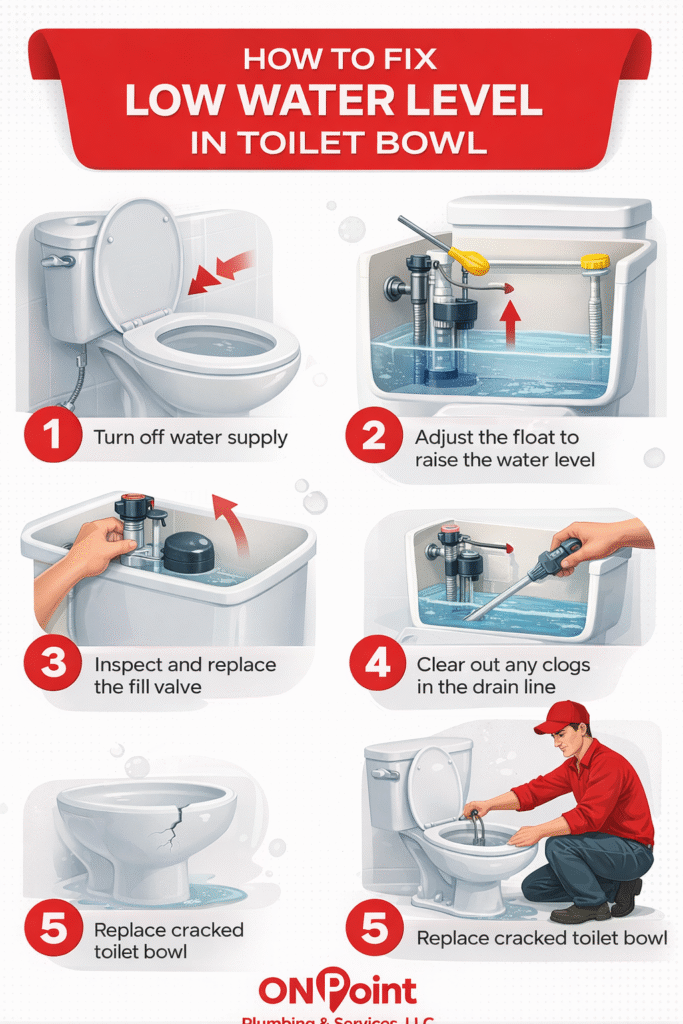
Adjust the Toilet Float
Open the tank lid and locate the float mechanism attached to the fill valve. Adjust it slightly upward to allow more water into the tank.
This simple toilet float level adjustment often resolves the issue quickly without requiring professional help.
Inspect and Replace the Fill Valve
Turn off the water supply and flush the toilet to empty the tank. Remove the old fill valve and install a new one according to manufacturer’s instructions.
If you are unsure, you can contact professionals through
https://onpointplumber.com/contact/ for expert assistance.
Clean the Vent Pipe
Climb to your roof carefully and inspect the vent opening for debris. Remove any visible obstructions using a plumbing snake or water hose.
If the blockage is deep, consider hiring experts from
https://onpointplumber.com/services/sewer-and-drain/ to handle the job safely.
Remove Drain Blockages
Use a toilet auger to clear minor clogs inside the drain line. Insert the auger gently and rotate it to break up the obstruction.
For stubborn clogs, professional drain cleaning services are recommended to prevent further damage.
Replace a Cracked Toilet Bowl
If you suspect cracks, inspect the bowl thoroughly and look for moisture around its base. Replacement is the safest solution to avoid leaks.
You can explore repair services at
https://onpointplumber.com/services/water-leak-repair/ for reliable support.
Step-by-Step Toilet Water Level Adjustment
Follow these steps to perform a proper toilet water level adjustment at home:
- Turn off the water supply valve behind the toilet
- Remove the tank lid carefully and place it aside
- Locate the float and fill valve mechanism
- Adjust the float upward slightly for higher water levels
- Turn the water supply back on and test flushing
- Repeat adjustments until the desired level is achieved
These steps help ensure consistent performance and prevent recurring low water issues.

Preventive Maintenance Tips
Preventing future problems is easier than fixing recurring issues. Regular maintenance helps keep your toilet functioning efficiently.
- Check the float level every few months
- Inspect the fill valve for wear and mineral buildup
- Avoid flushing non-flushable items
- Schedule periodic drain cleaning services
- Monitor for leaks or unusual water level changes
For complete plumbing care, visit
https://onpointplumber.com/services/ to explore available services.
When to Call a Professional Plumber
While many fixes are simple, some problems require expert intervention. If the issue persists after adjustments, it may indicate deeper plumbing complications.
Professional plumbers have the tools and experience to diagnose hidden issues quickly. They can also prevent further damage that may result from incorrect repairs.
Conclusion
A low water level in the toilet bowl is a common issue that can disrupt daily comfort and hygiene. Fortunately, most causes are easy to identify and fix with basic tools and knowledge.
By understanding toilet bowl low water level causes and applying the right solutions, you can restore proper function efficiently. Regular maintenance and timely repairs will ensure your toilet remains reliable for years to come.
Ready to Fix Your Toilet the Right Way
Do not let a small issue turn into a major plumbing problem that disrupts your daily routine. Take action today and restore your toilet performance with confidence.
Whether you need quick repairs or complete plumbing support, trusted professionals are just a click away. Visit https://onpointplumber.com and get expert help tailored to your needs.
Your home deserves reliable plumbing. Start fixing the problem today and enjoy peace of mind with every flush.
Frequently Asked Questions
1. What is the ideal water level in a toilet bowl
The water level should sit about one inch below the overflow tube for optimal flushing performance and efficiency.
2. Can a clogged vent pipe affect toilet water levels
Yes, a clogged toilet vent pipe disrupts airflow and can lead to improper water levels during flushing.
3. How do I know if my fill valve is faulty
Slow refilling, strange noises, or inconsistent water levels usually indicate toilet fill valve problems.
4. Is it safe to adjust the toilet float myself
Yes, toilet float level adjustment is simple and safe if done carefully, following basic instructions.
5. When should I replace my toilet instead of repairing it
If there are cracks or repeated issues despite repairs, replacing the toilet is often the better long-term solution.