


Water pressure affects almost every activity inside a home. From taking showers to washing dishes, proper water flow improves comfort and convenience daily. However, many homeowners experience weak water pressure without understanding the real cause. This issue can make simple tasks frustrating and may indicate hidden plumbing problems.
Maintaining the ideal house water pressure protects plumbing fixtures and improves household efficiency. Pressure that is too low creates inconvenience, while excessive pressure damages pipes and appliances over time. Therefore, understanding how to balance water pressure is essential for every homeowner.
This guide explains how to increase water pressure at home, common causes of pressure loss, and effective low water pressure solutions. You will also learn practical residential water pressure tips that improve plumbing performance and help prevent future problems.
What Is the Ideal House Water Pressure?
The ideal house water pressure for most homes ranges between 40 and 60 PSI. PSI means pounds per square inch, which measures water pressure inside plumbing systems.
Pressure below this range often creates weak water flow. On the other hand, extremely high pressure may damage plumbing fixtures and appliances. Therefore, maintaining balanced pressure helps improve efficiency and extend the plumbing system’s lifespan.
Recommended Water Pressure Levels
Water Pressure Range | Condition | Impact on Home |
Below 40 PSI | Low Pressure | Weak water flow |
40 to 60 PSI | Ideal Pressure | Smooth plumbing performance |
Above 80 PSI | High Pressure | Pipe and fixture damage |
Many homeowners ignore pressure issues until they become severe. However, early diagnosis helps avoid expensive plumbing repairs later.
Common Home Water Pressure Problems
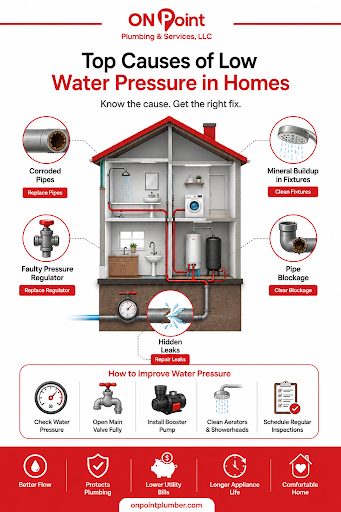
Several plumbing issues can reduce household water pressure. Understanding these causes helps homeowners choose the right repair solution.
1. Pipe Corrosion
Older pipes often develop internal corrosion over time. Mineral buildup restricts water movement and reduces flow throughout the house.
Common warning signs include:
- Rust colored water
- Uneven pressure in fixtures
- Reduced shower flow
- Frequent plumbing leaks
Pipe replacement may become necessary if corrosion is severe.
2. Hidden Water Leaks
Leaks are one of the most common home water pressure problems. Even small leaks reduce water flow and increase monthly utility bills.
Signs of hidden leaks include:
- Wet walls or floors
- Mold growth
- Unexplained water usage
- Sudden pressure loss
Professional plumbers use advanced leak detection tools to locate hidden damage quickly.
3. Faulty Pressure Regulators
Pressure regulators control the water pressure entering the home. When these devices fail, homeowners often notice sudden pressure changes.
A damaged regulator may cause:
- Extremely low pressure
- Excessive water force
- Noisy pipes
- Appliance damage
Replacing the regulator usually restores balanced water pressure.
4. Clogged Plumbing Fixtures
Mineral deposits often block faucet aerators and showerheads. This buildup restricts water movement and lowers fixture performance.
Cleaning these fixtures regularly helps maintain smooth water flow.
How to Increase Water Pressure at Home
Many homeowners search for effective ways to improve household water flow. Fortunately, several practical solutions can help restore pressure safely.
Inspect the Main Water Valve
The main shut-off valve controls water entering the property. If this valve remains partially closed, pressure throughout the house decreases significantly.
Check whether the valve is fully open. This simple adjustment may restore normal pressure immediately.
Replace Old Plumbing Pipes
Older galvanized pipes often collect rust and debris internally. Replacing outdated pipes improves water movement and reduces plumbing restrictions.
Modern materials such as copper and PEX provide better performance and durability.
Install a Water Pressure Booster System
A water pressure booster system increases water flow using mechanical pressure support. These systems work well in homes with a consistently weak municipal water supply.
Benefits of booster systems include:
- Stronger showers
- Faster appliance filling
- Better irrigation performance
- Improved overall comfort
Professional installation ensures proper system performance and safety.
Low Water Pressure Solutions That Actually Work
Finding the right low water pressure solutions depends on the source of the issue. Some problems require simple maintenance, while others need professional plumbing repairs.
Effective Solutions for Low Pressure
Problem | Recommended Solution |
Mineral buildup | Clean fixtures regularly |
Pipe corrosion | Replace damaged pipes |
Water leaks | Repair leaks immediately |
Weak municipal supply | Install booster system |
Faulty pressure regulator | Replace regulator |
Sediment buildup | Flush plumbing system |
Regular inspections help identify pressure problems before they become serious.
Signs You Need Professional Plumbing Help
Some pressure issues require immediate professional attention. Delaying repairs may increase damage and repair costs.
Call a Professional Plumber If You Notice:
- Sudden pressure loss throughout the home
- Water discoloration
- Loud pipe noises
- Recurring plumbing leaks
- Water pressure fluctuations
- Constant dripping fixtures
Experienced plumbers can inspect the system and recommend long-term repair solutions.
Benefits of Maintaining Ideal Water Pressure
Balanced water pressure improves more than comfort. It also protects plumbing systems and household appliances from unnecessary strain.
Key Benefits Include
- Better shower performance
- Faster washing machine cycles
- Lower plumbing repair costs
- Reduced pipe stress
- Improved appliance lifespan
- Better water efficiency
Maintaining ideal house water pressure creates a healthier and more efficient plumbing system.
Residential Water Pressure Tips for Homeowners
Preventive maintenance helps homeowners avoid pressure-related plumbing problems. Simple habits often improve plumbing performance significantly.
Helpful Residential Water Pressure Tips
- Inspect visible pipes regularly
- Repair leaks quickly
- Clean showerheads every few months
- Avoid chemical drain cleaners
- Schedule annual plumbing inspections
- Monitor water bills for unusual changes
These maintenance steps improve water flow and protect plumbing infrastructure.
How a Water Pressure Booster System Helps
A water pressure booster system is one of the most effective solutions for persistent low-pressure issues. These systems increase incoming water force and improve overall plumbing efficiency.
Advantages of Booster Systems
Feature | Benefit |
Improved flow rate | Stronger water pressure |
Consistent performance | Balanced household supply |
Better appliance operation | Faster water delivery |
Enhanced comfort | Better showers and sinks |
Homes located in elevated areas often benefit greatly from these systems.

How On Point Plumbing Can Help
Professional plumbing services help homeowners restore proper water pressure safely and efficiently. On Point Plumbing provides reliable inspections, repairs, and system upgrades for residential plumbing systems.
Their experienced team offers:
- Leak detection services
- Pipe replacement solutions
- Water pressure inspections
- Booster system installation
- Fixture repairs
- Preventive plumbing maintenance
Whether you need to fix low water pressure in house systems or upgrade plumbing infrastructure, experienced professionals deliver dependable solutions.
Learn more about trusted plumbing services by visiting:
Restore Comfort With Professional Plumbing Solutions
Do not let poor water pressure affect your comfort and daily routine. Whether you need leak repairs, pipe replacement, or a water pressure booster system, professional plumbing support can restore reliable performance quickly.
Why Choose On Point Plumbing?
- Experienced Residential Plumbers
- Reliable Low Water Pressure Solutions
- Fast Inspection and Repair Services
- Modern Plumbing Equipment
- Long Lasting Plumbing Solutions
Visit On Point Plumbing today and discover trusted solutions for achieving the ideal house water pressure in your home.
Frequently Asked Questions
What is the ideal house water pressure?
The ideal house water pressure typically ranges between 40 and 60 PSI for smooth and safe plumbing performance.
How can I increase water pressure at home?
You can increase water pressure by checking valves, replacing old pipes, cleaning fixtures, or installing a booster system.
What causes low water pressure in houses?
Common causes include pipe corrosion, leaks, clogged fixtures, faulty regulators, and municipal water supply issues.
Is high water pressure dangerous for plumbing systems?
Yes. Excessive pressure can damage pipes, appliances, and fixtures over time, leading to costly plumbing repairs.
When should I call a professional plumber for pressure issues?
You should contact a plumber if pressure problems continue, leaks appear, or water flow changes suddenly throughout the home.