
If you’ve ever caught a faint whiff of gas in the air and felt that quick sting of worry, you already know how serious gas line safety can be. Regular gas line safety checks aren’t just another item on the homeowner’s to-do list; they’re the quiet, steady insurance that keeps your family safe.
Gas powers more than your stove or heater; it fuels everyday comfort. But when those lines go unchecked, the risks can sneak up in silence. That’s why every homeowner should understand the basics of home gas line inspection, spot early warning signs, and know when to call a licensed gas plumber in Zephyr, TX.
Why Gas Line Safety Checks Matter
Gas lines run beneath our homes like unseen arteries. They keep the house warm, the water hot, and dinner cooking. But even the smallest leak can trigger major problems, from health risks to structural damage.
A professional gas line safety check isn’t just a formality. It’s about detecting hidden leaks, aging pipes, and loose fittings before they turn dangerous. Routine gas line maintenance also improves efficiency; your appliances burn cleaner and last longer when gas lines are healthy.
In homes across Texas, where seasonal temperature swings can cause metal pipes to expand and contract, regular inspections make an even bigger difference.
Common Signs of a Gas Leak in the House
Gas leaks don’t always come with a warning siren. Sometimes, the signs are subtle:
Signs of a Gas Leak in the House | What You Might Notice |
Foul, sulfur-like smell | Similar to rotten eggs |
Hissing or whistling noise | Often near appliances or pipes |
Dying plants indoors or near the line | Gas displaces oxygen in the soil |
Higher-than-normal gas bill | Continuous leak wasting gas |
Headaches or nausea at home | Possible low-level carbon monoxide exposure |
If you ever notice these signs, leave the home immediately and call your utility provider or a licensed gas plumber in Zephyr, TX. Do not use electrical switches, phones, or anything that could create a spark.
DIY vs Professional Gas Line Inspection
There’s a fine line between what you can safely check yourself and what’s better left to a pro. Here’s a quick comparison to help:
Inspection Type | What You Can Do | What a Professional Does |
Visual Checks | Look for rust, corrosion, or broken seals around visible pipes. | Uses cameras and detection tools to inspect internal and underground lines. |
Smell & Sound Test | Listen for hissing, smell for sulfur odor. | Performs pressure and leak tests with specialized equipment. |
Appliance Connection | Ensure appliances are properly connected. | Tests pressure stability and verifies proper gas flow. |
Safety Devices | Make sure carbon monoxide detectors work. | Checks gas shutoff valves and replaces faulty regulators. |
Maintenance Schedule | Keep a yearly reminder. | Provides certified documentation for safety and insurance compliance. |
A DIY glance is useful, but it’s not a replacement for a certified home gas line inspection. A trained plumber uses calibrated instruments that detect leaks you’ll never smell or hear.
Key Gas Line Maintenance Tips
Every homeowner can take steps to extend the life of their gas system. Here are a few gas line maintenance tips that help prevent future repairs:
- Schedule yearly inspections. Don’t wait for a leak. Regular gas line safety checks catch wear before it becomes a hazard.
- Know your shutoff valve. Learn how to turn it off in an emergency. It can make all the difference during a leak.
- Protect outdoor lines. Keep them clear of debris, plants, or construction that could damage the piping.
- Upgrade old lines. If your home is more than 20 years old, consider updating metal lines with modern, corrosion-resistant materials.
- Watch your appliances. Uneven flames, soot, or frequent pilot light failures could signal line issues.
These small habits build long-term safety. If you’re ever unsure, a licensed gas plumber in Zephyr, TX can guide you through proper upkeep.
What Happens During a Professional Gas Line Safety Check
When you schedule a home gas line inspection, here’s what typically happens:
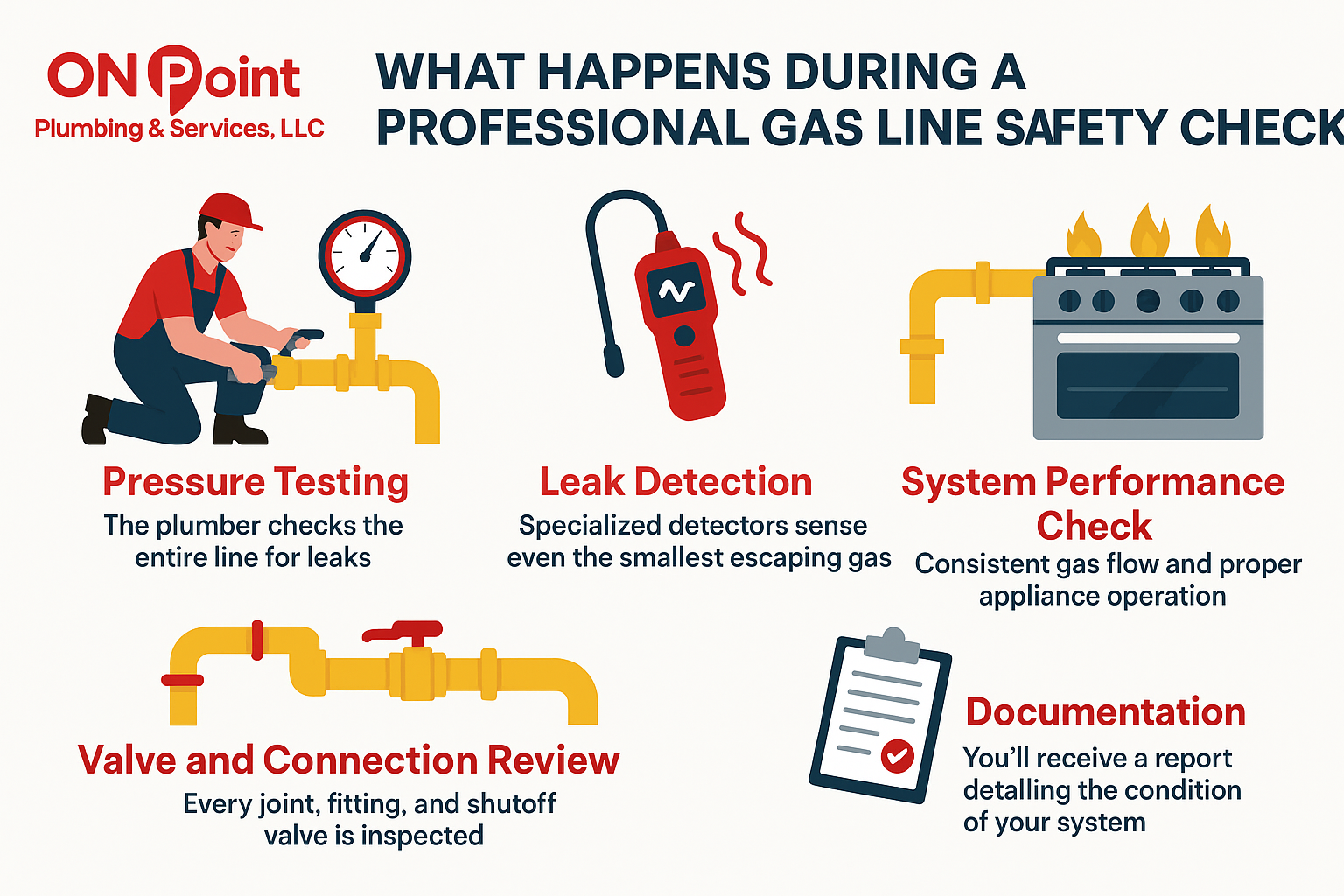
Professionals follow strict safety protocols, and they’re trained to handle repairs on the spot if an issue is found.
The Hidden Cost of Skipping Inspections
Skipping gas line safety checks might save a few dollars today, but can cost thousands later. Corrosion or unnoticed leaks can damage foundations, walls, and HVAC systems. Worse, untreated leaks create serious health hazards.
Think of inspections as preventive medicine for your home. Like an annual check-up, they keep you ahead of problems that could turn costly or dangerous.
When to Call a Licensed Gas Plumber in Zephyr, TX
If you’ve noticed an unusual smell, bubbling paint near gas lines, or even just inconsistent heating, it’s time to call a professional. The certified team at On Point Plumber offers expert gas line safety checks throughout Zephyr and nearby areas.
They’re also the go-to for leak detection and remodeling services, ensuring your gas lines stay safe before, during, and after any project.
Preventive Inspection vs Emergency Repair
Situation | Inspection Cost Range | Emergency Repair Cost Range | Outcome |
Regular Yearly Check | $100–$200 | Minimal downtime | Prevents leaks, extends lifespan |
Emergency Leak Repair | $400–$1,000+ | Requires immediate service | Risk of damage, potential evacuation |
A little prevention beats the stress of emergency calls every time.
Reliable Sources and Further Reading
For homeowners who want to learn more, check resources from the U.S. Consumer Product Safety Commission and your local utility provider. They offer valuable information on gas appliance maintenance and household safety planning.
Stay Ahead of Trouble
Gas lines rarely fail overnight; they warn you quietly through smells, sounds, or subtle system changes. Regular gas line safety checks are the difference between quick maintenance and a crisis.
Don’t wait for the smell of gas to tell you something’s wrong. Schedule your professional inspection today with a licensed gas plumber in Zephyr, TX, and keep your home secure, efficient, and ready for whatever the season brings.
Ready to act? Schedule your gas line inspection with On Point Plumber today and rest easy knowing your home’s safety is in expert hands.
Frequently Asked Questions
What is included in a gas line safety check?
A plumber checks for leaks, corrosion, pressure issues, and verifies that all shutoff valves work properly.
How often should I schedule a home gas line inspection?
Once a year is ideal, or immediately if you suspect a leak.
What are the signs of a gas leak in the house?
Watch for sulfur smells, hissing sounds, or wilting plants near lines.
Can I inspect my gas lines myself?
You can do basic visual checks, but only a certified plumber can perform accurate testing.
Who should I call for a licensed gas plumber in Zephyr, TX?
Contact On Point Plumber for certified inspections and repairs across the Zephyr area.




