


If you’ve ever dealt with a plumbing issue, you know how quickly it can interrupt daily life. But when that problem happens in a business, the impact is far greater. That’s why commercial plumbing needs are on a completely different level from residential plumbing.
A leaking faucet at home might be a small inconvenience. In a restaurant, that same leak can cause downtime, safety hazards, and even health code violations. Let’s explore what really sets commercial plumbing vs residential plumbing apart, and why understanding those differences matters so much for your business.
Why Commercial Plumbing Needs Are More Complex
Commercial buildings are built for scale. They serve dozens, sometimes hundreds, of people daily. That means their plumbing systems must handle much higher water usage, waste output, and regulatory standards.
While residential systems are designed for comfort, commercial plumbing needs to focus on reliability, compliance, and efficiency under constant pressure.
Common Examples
- Office buildings with multiple restrooms per floor
- Restaurants requiring industrial-grade grease traps
- Hotels managing hundreds of simultaneous showers
- Medical facilities requiring sterilized, temperature-controlled water
Each of these environments demands specialized planning, installation, and ongoing business plumbing maintenance in Texas and beyond.
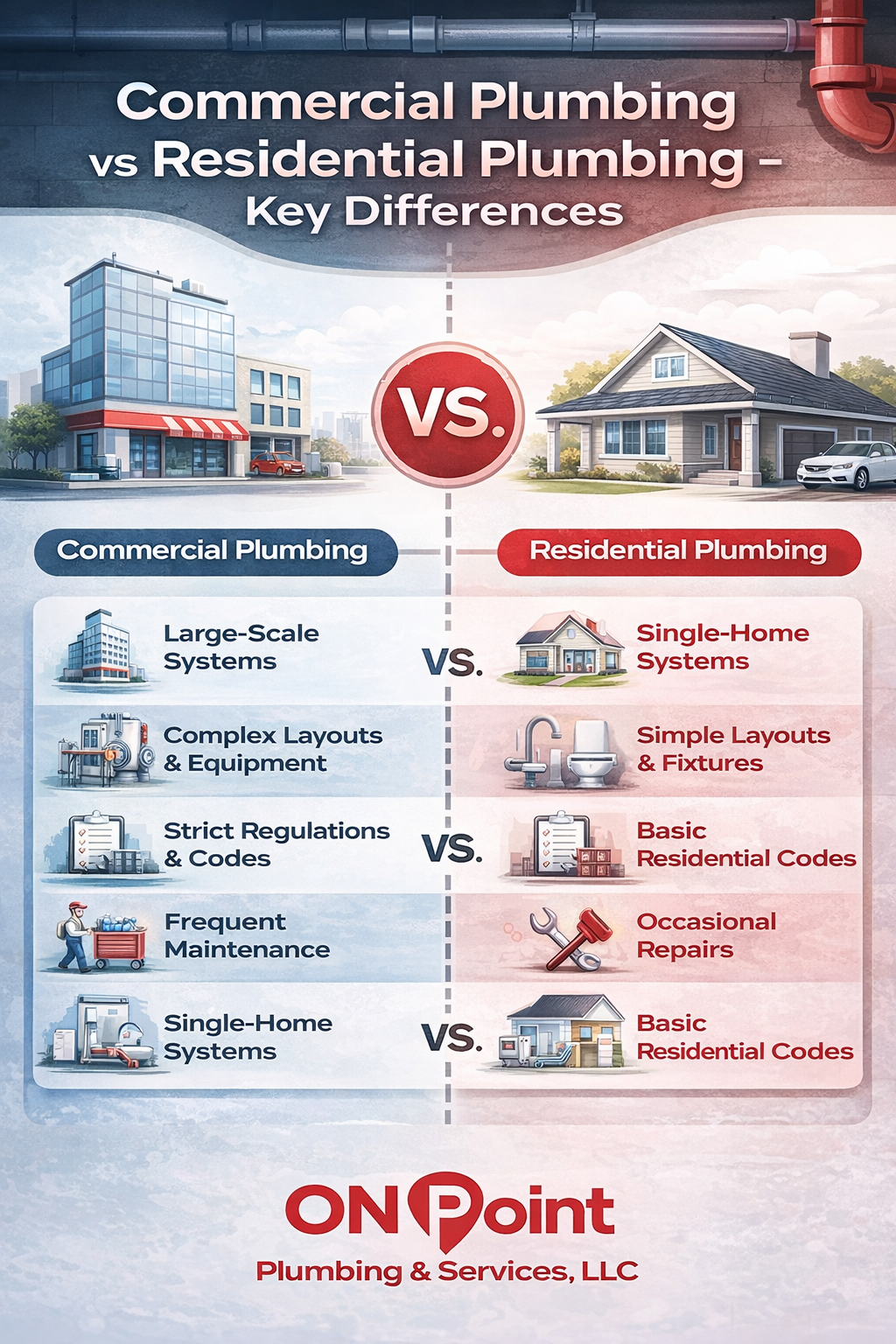
Commercial Plumbing vs Residential Plumbing- Key Differences
Let’s look at how these two systems stack up.
Feature | Commercial Plumbing | Residential Plumbing |
Scale | Large-scale systems serving multiple users | Smaller systems for one household |
Complexity | Multiple floors, fixtures, and specialized equipment | Simple layouts and limited connections |
Maintenance | Frequent inspections, compliance checks, and servicing | Occasional maintenance or repair |
Regulations | Must meet city, state, and industry standards | Follows basic residential codes |
Usage Patterns | Continuous or peak-heavy usage throughout the day | Consistent, predictable use |
Downtime Impact | Affects productivity, revenue, and reputation | Inconvenient but contained to one household |
Understanding these large-scale plumbing system requirements helps prevent costly breakdowns and ensures smooth business operations.
Why These Differences Matter for Your Business
Ignoring the distinct needs of a commercial setup can lead to expensive mistakes.
For example, using residential-grade fixtures in a restaurant may lead to premature wear or even flooding. Or skipping scheduled maintenance in a hotel could disrupt dozens of guests. In short, the stakes are higher.
At On Point Plumbing, our licensed experts handle complex systems daily, from multi-story office piping to custom water management solutions, ensuring that each component works flawlessly together.
The Importance of Business Plumbing Maintenance in Texas
Texas weather is unpredictable. Long dry spells followed by sudden storms can put extra stress on underground lines and water systems. Regular business plumbing maintenance in Texas keeps those systems resilient and compliant with local codes.
Maintenance typically includes:
- Backflow prevention testing
- Water pressure checks
- Pipe corrosion inspections
- Drain and sewer cleaning
- Hot water system calibration
When performed regularly, these steps help avoid emergencies and keep your operations running smoothly.
Large Scale Plumbing System Requirements
Commercial setups often require customized solutions beyond standard plumbing. Depending on your building type, these may include:
- Pressure balancing systems for multi-level buildings
- Grease traps for restaurants and food services
- Industrial-grade water heaters for continuous use
- Booster pumps to maintain a consistent water flow
- Fire suppression systems integrated with plumbing.
A residential plumber might not have the training or tools to install or service these systems. That’s why you need professionals who specialize in commercial plumbing needs and understand the engineering behind them.
Residential Plumbing Service Differences
esidential systems, on the other hand, focus on comfort and efficiency for families. The work often involves:
- Installing fixtures like sinks, showers, and water heaters
- Repairing leaks or pipe bursts
- Maintaining water quality for daily use
While both commercial and residential plumbers share core skills, their approach and scope are worlds apart. Residential jobs are often short-term and small-scale, while commercial plumbing needs require long-term planning, system design, and compliance management.

Choosing the Right Plumbing Partner
When selecting a plumber, ask about:
- Experience with similar-sized projects
- Licensing and insurance for commercial work
- Availability for 24/7 emergency service
- Knowledge of state and city plumbing codes
A good plumbing partner won’t just fix issues; they’ll help you prevent them. That’s where On Point Plumbing stands out. Our technicians handle everything from preventive maintenance to full system overhauls, tailored to your facility’s unique requirements.
You can learn more about our commercial plumbing services here.
Real-World Example: Office Building in Texas
One Texas business we serviced had recurring low water pressure across three floors. The issue wasn’t a clog; it was an outdated pressure regulator system designed for residential use. After installing a commercial-grade booster pump and balancing valves, water pressure stabilized instantly.
This simple upgrade prevented thousands in future repair costs and improved tenant satisfaction. It’s a perfect reminder that commercial systems require commercial solutions.
Why Proper Understanding Saves Time and Money
Misunderstanding your building’s plumbing scale can lead to overspending or under-maintenance. For instance, a retail shop owner who delays business plumbing maintenance in Texas might face sudden line breaks due to mineral buildup, a preventable problem with regular inspections.
When in doubt, always consult experts familiar with large-scale plumbing system requirements. It’s not just about fixing pipes; it’s about protecting your business’s continuity and reputation.
Why Understanding Commercial Plumbing Matters
Commercial plumbing isn’t simply a larger version of residential work, it’s a specialized field with tougher codes, higher performance demands, and greater responsibility.
When you truly understand your commercial plumbing needs, you’re not just preventing problems; you’re investing in your property’s efficiency, safety, and long-term value.
If your business is ready for reliable, expert plumbing solutions, connect with On Point Plumbing & Services today and keep your operations running smoothly.
Frequently Asked Questions
What are the commercial plumbing needs?
They include all the specialized systems, equipment, and maintenance services required to manage plumbing in large buildings or business facilities.
How is commercial plumbing different from residential?
Commercial systems are larger, more complex, and regulated. Residential systems are simpler and designed for daily household use.
Why is business plumbing maintenance in Texas essential?
Regular maintenance prevents costly breakdowns and ensures compliance with local safety codes, especially in Texas’s varied climate.
Can a residential plumber handle commercial plumbing needs?
Usually not. Commercial systems require advanced tools, training, and understanding of large-scale building dynamics.
What are the large-scale plumbing system requirements for businesses?
They may include booster pumps, pressure regulators, fire suppression lines, and high-capacity water heaters, all designed for heavy use.