
If you have ever wondered about commercial plumbing vs residential plumbing, you are not alone. Homeowners, business managers, and property developers often assume plumbing is the same everywhere. Pipes, drains, and water supply all sound familiar, but the reality is that the systems, scale, and even the skillsets involved can be very different.
Understanding the difference between commercial and residential plumbing systems is not just technical trivia. It can save you from hiring the wrong plumber, overspending on repairs, or missing out on important preventative maintenance.
At On Point Plumbing in Texas, we see both sides daily. From fixing water heaters in family homes to repairing grease traps in restaurants, our team knows exactly where these two types of plumbing meet and where they are worlds apart.
The Core Difference Between Commercial and Residential Plumbing Systems
Both residential and commercial plumbing handle the same essentials: water supply, drainage, and fixtures. The big difference comes down to scale, complexity, and regulations.
Here is a simple table that breaks it down:
Aspect | Residential Plumbing | Commercial Plumbing |
Scale | Serves a single household | Serves dozens or hundreds of people |
Usage | Light to moderate | Heavy, daily, nonstop |
Design | Standard layouts, simple routing | Complex layouts with multiple floors |
Fixtures | Fewer sinks, toilets, and showers | Dozens of sinks, industrial toilets, and floor drains |
Codes & Permits | Fewer, often local | Strict state, city, and federal compliance |
Emergency Risk | Mostly contained within a home | Failures affect businesses, customers, and revenue |
Why Commercial Plumbing Is More Demanding
Higher Usage and Wear
A family of four may flush toilets a few dozen times a day. A restaurant, on the other hand, could see hundreds of flushes in just a few hours. This level of strain requires stronger piping, specialized fixtures, and faster response when something breaks.
Building Design Complexity
Homes usually have one to three bathrooms, one kitchen, and a single water heater. Commercial buildings often span multiple floors with dozens of restrooms, water fountains, and specialized systems like fire sprinklers. A plumber working in these spaces needs advanced planning skills and knowledge of building codes.
Health and Safety Regulations
Commercial plumbing services in Texas must comply with strict safety rules. From ensuring proper backflow prevention to handling grease trap waste correctly, businesses can be fined if their systems are not up to code.
Residential Plumbing Maintenance Tips
Even though commercial plumbing gets more attention for its complexit
Even though commercial plumbing gets more attention for its complexity, homeowners should not overlook regular residential plumbing maintenance. A few small habits can prevent expensive repairs later:
- Inspect faucets and toilets for leaks once a month
- Drain and flush your water heater yearly
- Clean sink strainers to prevent clogs
- Avoid chemical drain cleaners that damage pipes
- Have a plumber check for hidden leaks if you notice higher water bills
, homeowners should not overlook regular residential plumbing maintenance. A few small habits can prevent expensive repairs later:
Questions to Ask a Commercial Plumber
When hiring for large-scale projects or ongoing support, it pays to ask the right questions. Here are some essentials:
- Do you have experience with my type of property?
A hospital’s needs are different from a retail store’s. Ask for specific examples. - What permits will be required?
A good commercial plumber knows exactly which codes apply in your Texas city. - Do you offer emergency services?
Businesses cannot afford long downtime. Check if they provide a 24/7 response. - Can you provide references from other businesses?
Real client stories reveal reliability better than promises. - What preventative services do you recommend?
Maintenance contracts often save money compared to emergency calls.
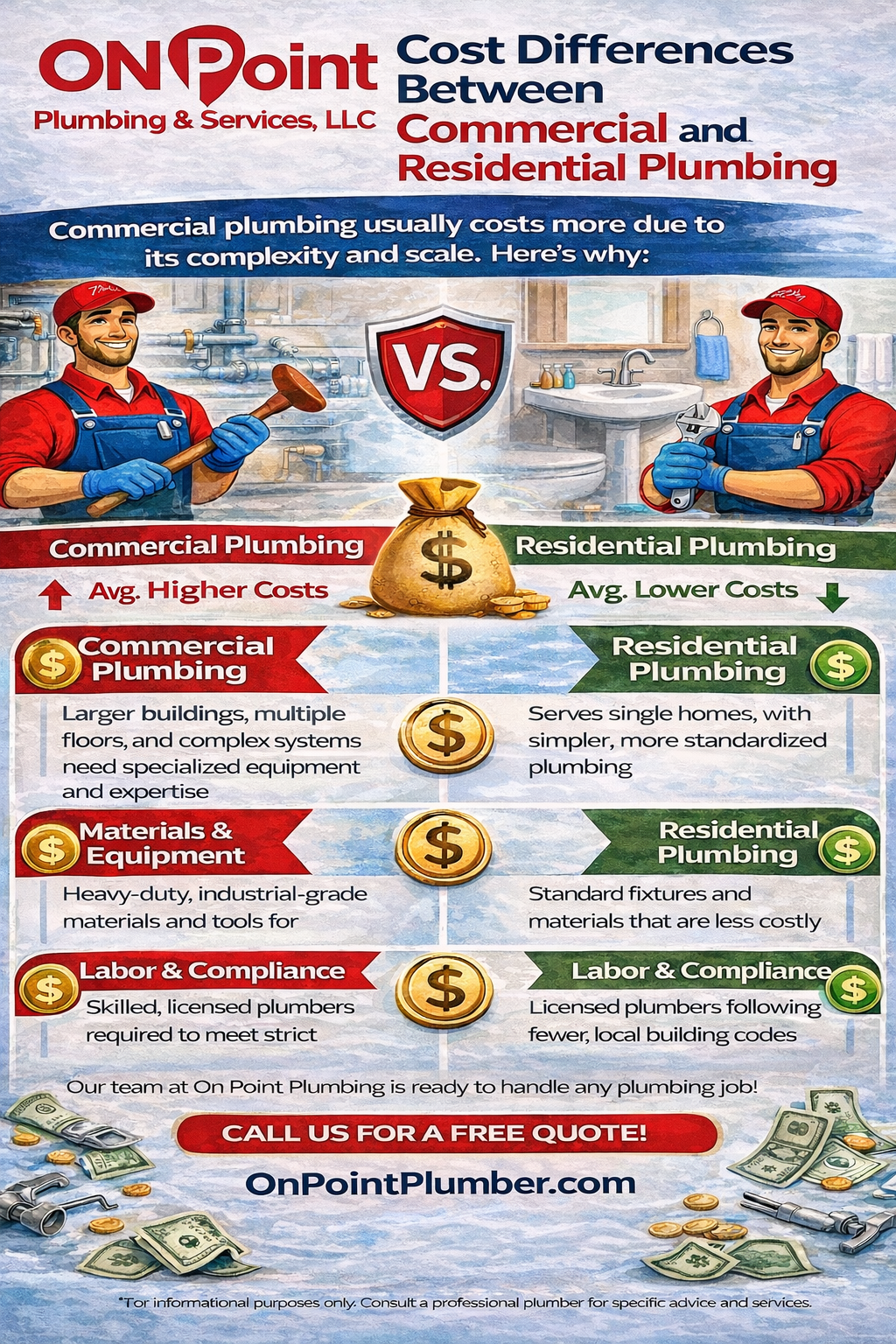
Cost Differences Between Commercial and Residential Plumbing
Why This Difference Matters to You
Imagine a restaurant owner who calls a residential plumber because of a backup in a floor drain. The plumber may be great with home systems, but unprepared for the grease trap and complex drainage layout. The delay costs the restaurant a day of lost revenue.
This is why knowing the difference between commercial and residential plumbing systems helps you hire the right team.
Commercial Plumbing Services Texas
At On Point Plumbing, we provide a wide range of commercial plumbing services in Texas, including:
- Installation and repair of large-scale water heaters
- Drain cleaning for restaurants and hotels
- Backflow prevention device testing
- Grease trap cleaning and compliance checks
- Emergency repair services available 24/7
You can explore more about our commercial plumbing services or reach out directly through our contact page.
Final Thoughts
Plumbing may look the same at first glance, but once you compare commercial plumbing vs residential plumbing, the differences become clear. Commercial systems require stronger materials, stricter compliance, and plumbers with advanced expertise. Residential systems, while smaller, still demand consistent care through simple maintenance habits.
Whether you are managing a business or a home in Texas, asking the right questions and understanding these differences ensures your plumbing runs smoothly.
Ready to Fix Your Plumbing the Right Way?
Whether you are a homeowner looking for reliable maintenance or a business owner facing complex plumbing needs, choosing the right team makes all the difference. At On Point Plumbing, we handle both residential and commercial plumbing services in Texas with clear communication, quick response, and lasting solutions.
Don’t wait for a small issue to turn into a costly emergency. Contact us today and get expert help you can trust.
Frequently Asked Questions
What is the main difference between commercial and residential plumbing systems?
Residential plumbing serves one household, while commercial plumbing supports larger buildings with higher usage and more complex layouts.
Do commercial plumbers also handle residential jobs?
Some do, but many specialize. Always confirm their experience with your type of system.
Why is commercial plumbing usually more expensive?
It often requires specialized equipment, larger materials, and compliance with stricter codes.
What are common commercial plumbing services in Texas?
Drain cleaning, grease trap maintenance, water heater installation, and emergency repairs are the most common.
How often should residential plumbing systems be checked?
At least once a year for inspections, with simple monthly checks for leaks and clogs.