
An unexpected increase in a commercial water bill can quickly affect operating costs. More importantly, it may reveal a plumbing problem that needs immediate attention.
Commercial properties often use significantly more water than residential buildings. Restrooms, kitchens, landscaping, cleaning equipment, water heaters, and other systems can operate throughout the day. Therefore, even a small plumbing issue can create considerable water loss over time.
A sudden commercial water bill increase should not automatically be blamed on higher business activity. Hidden leaks, running toilets, damaged water lines, inefficient fixtures, and unnoticed equipment problems can also increase consumption.
The United States Environmental Protection Agency reports that leaks can account for more than six percent of facility water use on average. Therefore, leak detection is an important starting point when water usage unexpectedly rises.
Understanding the most common causes can help Central Texas businesses control water waste and identify problems before repairs become more complicated.
Why Is My Commercial Water Bill So High?
Water consumption naturally changes when occupancy or business activity increases. Restaurants may serve more customers while offices may experience higher employee attendance.
However, unexplained increases deserve closer attention.
Start by comparing current bills with previous months and similar periods from the previous year. Then, consider whether operating hours, staffing levels, landscaping, cleaning schedules, or equipment use recently changed.
If business activity remained similar, the plumbing system should be investigated.
Common causes of high water bills in commercial buildings include:
- Hidden plumbing leaks
• Running toilets and urinals
• Dripping faucets
• Underground water line leaks
• Irrigation system problems
• Water heater leaks
• Faulty plumbing fixtures
• Excessive water pressure
• Inefficient older fixtures
• Unnoticed water use after business hours
In addition, unusually high consumption may involve more than one problem. A large commercial property can have several small leaks operating simultaneously.
1. Hidden Commercial Plumbing Leaks
Hidden leaks are among the most important issues to investigate after an unexplained water bill increase.
A pipe may leak behind drywall, beneath flooring, above ceilings, or below concrete. Because the water remains hidden, the problem can continue without disrupting normal operations immediately.
Eventually, you may notice damp areas, staining, musty odors, damaged materials, or lower water pressure.
On Point Plumbing notes that leaks can occur inside walls, beneath flooring, and under concrete slabs. The company also warns that unresolved leaks can increase water bills and cause property damage.
Professional commercial leak detection can help locate concealed problems before unnecessary water loss continues.
2. Running Commercial Toilets and Urinals
Commercial restrooms can use a significant amount of water, especially in busy offices, restaurants, stores, schools, and public facilities.
A toilet that continues running after flushing may waste water throughout the day. Unfortunately, these problems are easy to overlook in busy restrooms.
Faulty valves, seals, sensors, or flush mechanisms may cause repeated or continuous water flow.
Commercial toilets also deserve attention because older units can use substantially more water than modern efficient models. The EPA notes that WaterSense-labeled commercial toilets use no more than 1.28 gallons per flush.
Regular restroom inspections can identify running fixtures before they noticeably increase operating costs.
3. Dripping Faucets and Faulty Fixtures
One dripping faucet may not appear serious. However, a commercial property may contain dozens of faucets across restrooms, kitchens, break rooms, and service areas.
Several dripping fixtures can create continuous commercial water waste.
Furthermore, damaged sensors may cause automatic faucets to run longer than necessary. Worn cartridges, seals, valves, and connections can also allow water to escape continuously.
Facility managers should inspect frequently used fixtures and address dripping promptly.
The EPA recommends checking commercial facilities regularly for leaks and repairing problems quickly. It also recommends checking automatic fixture sensors for proper operation.
4. Underground Water Line Leaks
Some commercial water leaks never create visible indoor damage.
An underground service line can lose water beneath landscaping, parking areas, sidewalks, or other exterior spaces. Consequently, substantial water loss may occur before anyone notices.
Warning signs may include:
- Unexpectedly high water consumption
• Wet soil during dry weather
• Unusual green patches in landscaping
• Reduced water pressure
• Standing water near service lines
• Recurring moisture around paved areas
An unexplained increase combined with these signs may justify a professional plumbing inspection.
Because underground leaks can be difficult to locate visually, specialized commercial leak
5. Irrigation Systems Can Increase Water Usage
Commercial landscaping can consume substantial water, particularly during hot Central Texas weather.
A broken sprinkler head or leaking irrigation line may operate outside normal business hours. Therefore, the problem can remain unnoticed for weeks.
Incorrect timers can also create excessive watering. Likewise, damaged valves may continue releasing water after irrigation should stop.
The EPA identifies landscaping as one of the major water uses for many office properties. It recommends efficient irrigation practices as part of commercial water management.
Check landscaped areas regularly, especially when the property uses automatic irrigation.
6. Water Heater Leaks and Equipment Problems
Commercial water heaters support many daily operations. Restaurants, offices, healthcare facilities, and other businesses may depend heavily on dependable hot water.
A leaking tank, connection, valve, or nearby pipe can increase water usage while also threatening surrounding property.
Additionally, water heater problems may remain unnoticed inside utility rooms that employees rarely visit.
Inspect the area around commercial water heating equipment regularly. Look for moisture, corrosion, dripping connections, unusual sounds, or water collecting on the floor.
Prompt inspection can help determine whether a plumbing connection needs repair or the equipment requires professional service.
7. Older and Inefficient Plumbing Fixtures
Not every high water bill comes from a broken pipe.
Older toilets, urinals, faucets, and other fixtures may simply use more water than newer efficient models. Consequently, a commercial property can experience high consumption even without an active leak.
The EPA states that restroom fixtures and related equipment can represent a significant portion of facility water usage. Older commercial fixtures can offer meaningful opportunities for efficiency improvements.
Therefore, businesses with older plumbing should consider fixture efficiency during routine commercial plumbing maintenance.
8. Excessive Water Pressure
High water pressure can feel convenient, but excessive pressure can place additional stress on plumbing components.
Connections, supply lines, valves, and fixtures may experience increased wear. Eventually, small leaks can develop or existing weaknesses can worsen.
Pressure problems may also increase water consumption because fixtures release more water during normal use.
A commercial plumber can test pressure and determine whether the system is operating appropriately.
9. Water Use Outside Business Hours
Water consumption should usually decrease significantly when a business closes.
Therefore, noticeable overnight usage can provide an important clue.
Facility managers can compare meter readings at closing and opening when practical. Modern metering systems may also provide more detailed usage information.
The EPA recommends metering, monitoring, and leak detection as important parts of commercial water management. More frequent usage data can help businesses recognize unusual consumption patterns.
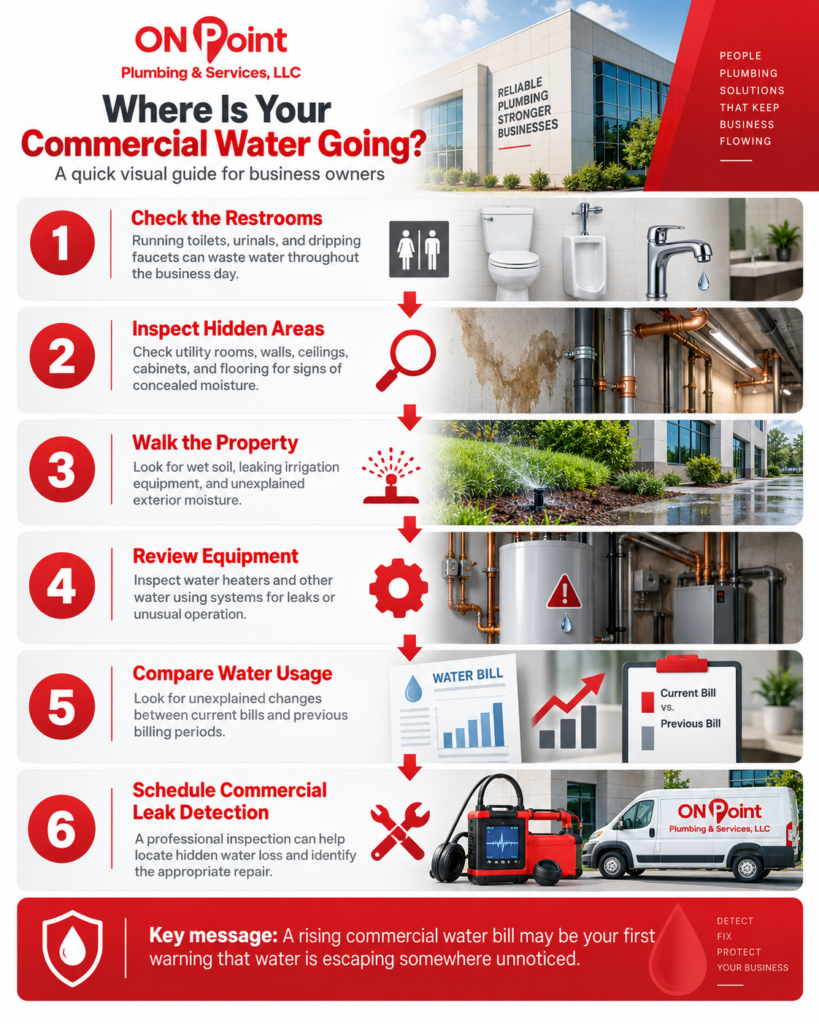
How to Reduce Water Usage in a Commercial Property
Controlling commercial water costs starts with understanding where water is being used.
Businesses can reduce unnecessary consumption by combining regular inspections with preventive maintenance.
Consider these practical steps:
- Review monthly water bills consistently
• Investigate sudden usage increases
• Repair dripping faucets promptly
• Check toilets for continuous running
• Inspect irrigation systems regularly
• Monitor water use after closing
• Replace inefficient fixtures when appropriate
• Inspect water heaters and utility rooms
• Schedule professional leak detection
• Develop a regular plumbing maintenance plan
Additionally, keep records of recurring plumbing problems. Patterns can help property managers identify equipment or areas that need closer attention.
When Should You Call a Commercial Plumber?
A small change in a water bill does not always indicate a plumbing emergency. However, large or unexplained increases should not be ignored.
Call a professional when water usage rises without changes in occupancy or operations. You should also seek help when leaks remain hidden or problems repeatedly return.
On Point Plumbing provides commercial plumbing services for restaurants, offices, retail properties, and other businesses in Zephyr, Brownwood, and surrounding communities. Its commercial services include routine maintenance and repair support designed to reduce business disruption.
Businesses seeking a commercial plumber in Central Texas can contact may also benefit from combining leak detection with regular system inspections.
Stop Paying for Water Your Business Is Not Using
An unusually high commercial water bill should prompt investigation rather than become another accepted operating expense.
Bill suddenly increased?
Compare usage with previous months and check for operational changes.
Hear water running after closing?
Inspect toilets, faucets, equipment, and other fixtures.
Cannot find the source?
Schedule commercial leak detection before water loss continues.
Need commercial plumbing in Zephyr, TX?
Contact On Point Plumbing for professional commercial plumbing support in Zephyr, Brownwood, and surrounding Central Texas communities. The company can be reached at 325 603 1230.
Finding the problem early can reduce water waste, protect your property, and keep unnecessary costs from growing.
Frequently Asked Questions
Why is my commercial water bill so high?
Possible causes include hidden leaks, running toilets, dripping faucets, irrigation problems, inefficient fixtures, and changing business water demand.
Can a hidden leak significantly increase a commercial water bill?
Yes. Hidden leaks can operate continuously without visible flooding. The EPA estimates that leaks average more than six percent of facility water use.
How can I find a hidden water leak in a commercial building?
Check meter usage, inspect walls and floors, listen for running water, and watch for pressure changes. Professional leak detection may locate concealed problems.
Can running commercial toilets increase water costs?
Yes. Faulty flush valves or other components can allow continuous water flow, especially in heavily used commercial restrooms.
When should I call a commercial plumber about a high water bill?
Call when consumption rises unexpectedly, visible leaks appear, fixtures run continuously, water pressure changes, or the source cannot be identified.




