
Water pressure plays a crucial role in maintaining comfort, efficiency, and functionality within every modern household. When the flow is too weak or inconsistent, daily routines become frustrating and time-consuming. Therefore, understanding the concept of ideal house water pressure helps homeowners maintain a balanced and efficient plumbing system.
In this detailed guide, you will learn how to identify common home water pressure problems, apply practical fixes, and explore professional solutions. Moreover, you will discover reliable ways to improve your system using expert guidance from trusted services like OnPoint Plumber.
What Is the Ideal House Water Pressure
The ideal house water pressure typically ranges between forty and sixty pounds per square inch for most residential properties. This range ensures consistent water flow without causing strain on pipes, fixtures, or appliances over time.
If pressure drops below this level, tasks like showering or washing dishes may feel inconvenient and inefficient. On the other hand, excessively high pressure can damage plumbing components and increase the risk of leaks or pipe bursts.
Therefore, maintaining the right balance is essential for both comfort and long-term system durability.
Common Signs of Home Water Pressure Problems
Recognizing early signs of water pressure issues allows homeowners to take corrective action before serious damage occurs. These symptoms often appear gradually, making them easy to overlook at first.
Here are some common indicators:
- Weak water flow from taps and showerheads
- Slow-filling washing machines or dishwashers
- Inconsistent pressure during peak usage times
- Unusual noises in pipes when water is running
- Frequent leaks or dripping fixtures
If you notice these signs, it may indicate deeper plumbing issues that require professional inspection or repair.
Main Causes of Low Water Pressure
Understanding the root cause of low water pressure solutions helps in choosing the most effective method for improvement. Several factors can contribute to reduced water flow within a home.
1. Pipe Blockages
Mineral deposits and debris accumulate over time, restricting water flow through pipes and fixtures.
2. Leaking Pipes
Hidden leaks reduce overall pressure by diverting water away from intended outlets. You can explore professional help here:
Water Leak Repair Services
3. Faulty Pressure Regulator
A malfunctioning regulator can cause sudden drops or fluctuations in water pressure levels throughout the home.
4. Municipal Supply Issues
Sometimes, the problem originates outside your property due to local supply limitations or maintenance work.
5. Corroded Plumbing System
Older homes often experience corrosion inside pipes, which narrows the internal diameter and reduces water flow efficiency.
How to Increase Water Pressure at Home
Fortunately, there are several effective methods to improve water pressure without extensive renovations. However, choosing the right solution depends on the underlying cause.
Simple Fixes You Can Try
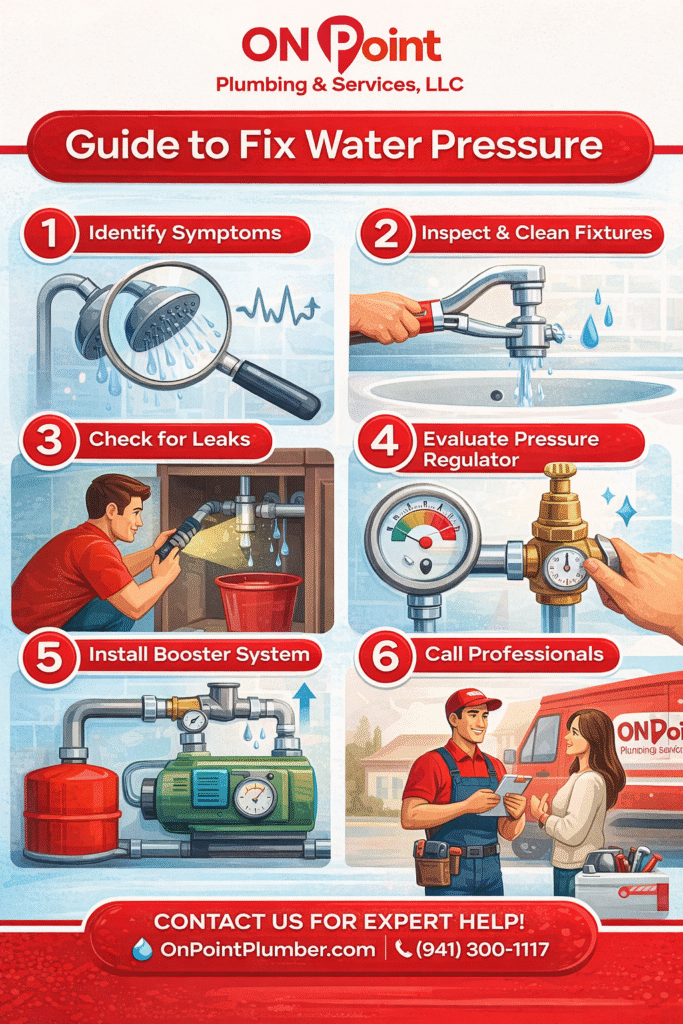
- Clean clogged aerators and showerheads regularly
- Check and fully open all shut-off valves
- Inspect visible pipes for leaks or damage
- Replace old fixtures with modern, efficient designs
These steps often resolve minor issues quickly and restore normal water flow within the system.
Advanced Low Water Pressure Solutions
If basic fixes do not solve the issue, more advanced solutions may be required to restore proper water pressure.
Install a Water Pressure Booster System
A water pressure booster system increases flow by using pumps and pressure tanks to enhance the supply. This solution is especially useful for homes with consistently low municipal water pressure.
Replace Old Plumbing
Upgrading outdated pipes improves flow efficiency and prevents recurring pressure issues caused by corrosion or blockages.
Pressure Regulator Adjustment
A professional plumber can calibrate or replace the pressure regulator to maintain optimal pressure levels safely.
For expert assistance, you can explore complete services here:
Plumbing Services
Comparison Table of Water Pressure Solutions
| Solution Type | Cost Level | Effectiveness | Best For |
| Cleaning fixtures | Low | Moderate | Minor blockages |
| Leak repair | Medium | High | Hidden leaks |
| Booster system installation | High | Very High | Low supply pressure |
| Pipe replacement | High | Long lasting | Old or corroded plumbing |
| Regulator adjustment | Medium | High | Pressure imbalance |
When to Call a Professional Plumber
Although many solutions can be handled independently, certain situations require professional expertise to avoid further complications.
You should consider contacting a plumber if:
- Pressure remains low after basic troubleshooting
- You suspect hidden leaks within the walls or underground
- Pipes are visibly corroded or damaged
- Pressure fluctuates unpredictably across fixtures
For reliable and prompt assistance, visit:
Contact OnPoint Plumber
Preventing Future Water Pressure Problems
Maintaining ideal house water pressure requires consistent care and preventative measures. By following these practices, homeowners can avoid recurring issues and extend the lifespan of their plumbing systems.
Preventative Tips
- Schedule regular plumbing inspections
- Install water softeners in areas with hard water
- Replace aging pipes before failure occurs
- Monitor pressure levels periodically using a gauge
- Clean fixtures to prevent mineral buildup
Additionally, proper maintenance reduces repair costs and ensures smooth water flow throughout the home.
Importance of Drain and Sewer Maintenance
Water pressure issues can sometimes originate from clogged drains or sewer line blockages. These problems restrict proper water movement and create imbalances within the plumbing system.
Professional drain cleaning services can eliminate these obstructions and restore optimal performance. Learn more here:
Sewer and Drain Services
Benefits of Maintaining Ideal Water Pressure
Maintaining correct water pressure provides several long-term advantages for homeowners.
- Improved daily comfort during showers and cleaning tasks
- Increased efficiency of appliances like washing machines
- Reduced risk of plumbing damage and leaks
- Lower water wastage and utility costs
- Extended lifespan of pipes and fixtures
Therefore, investing in proper pressure management enhances both convenience and financial savings over time.
Achieve Perfect Water Pressure with Expert Help Today
Achieving the ideal house water pressure is essential for maintaining comfort, efficiency, and long-term plumbing reliability. By understanding common causes and applying the right solutions, homeowners can resolve issues effectively and prevent future complications.
However, not every problem has a simple fix. Therefore, working with experienced professionals ensures accurate diagnosis and lasting results. Whether you need leak repair, drain cleaning, or a complete system upgrade, expert help makes all the difference.
Ready to transform your water flow and enjoy consistent pressure throughout your home?
Visit OnPoint Plumber today and let trusted professionals handle your plumbing needs with precision and care.
Frequently Asked Questions
1. What is considered ideal house water pressure
The ideal range is between forty and sixty pounds per square inch for most residential plumbing systems.
2. How can I check water pressure at home
You can use a pressure gauge attached to an outdoor faucet to measure current pressure levels accurately.
3. What causes sudden drops in water pressure
Common causes include leaks, clogged pipes, faulty regulators, or issues with the municipal water supply.
4. Is a water pressure booster system worth it
Yes, it is highly effective for homes with consistently low supply pressure and provides immediate improvement.
5. Can low water pressure damage appliances
Yes, insufficient pressure can reduce appliance efficiency and lead to longer operation times or incomplete cycles.